
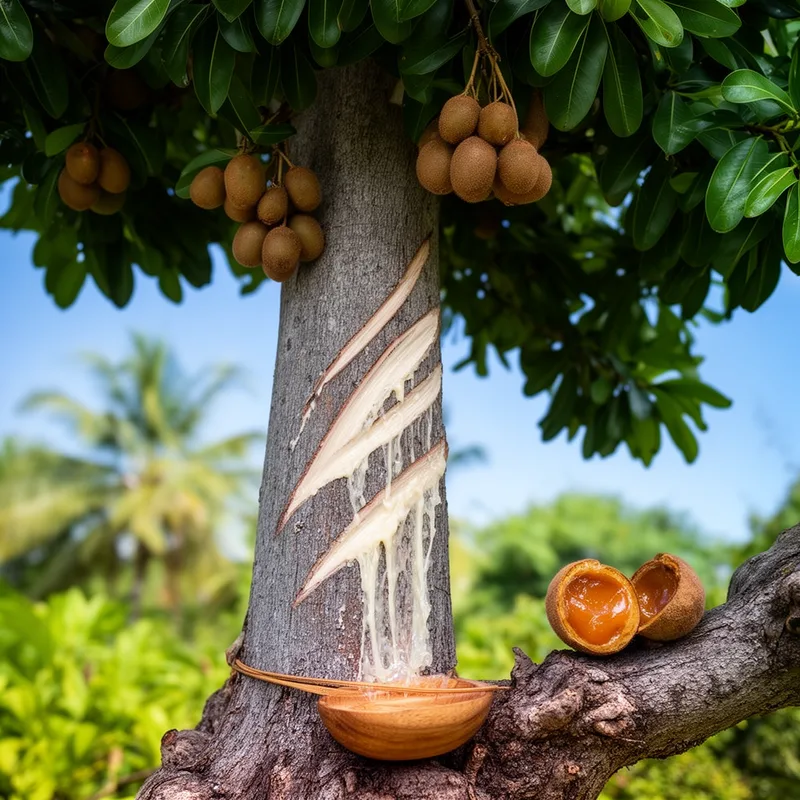
sapodilla tree
- noun
- /ˌsæpəˈdɪlə tri/
- US
- Her backyard boasts a flourishing sapodilla tree laden with sweet, brown fruit.
Examples
-
The sapodilla tree grows well in tropical climates.
-
Chicle, once used in chewing gum, is harvested from the sapodilla tree.
-
The sapodilla tree thrives in warm, tropical climates with well-drained soil.
-
I planted a sapodilla tree in my backyard.
-
The sapodilla tree is known for its delicious brown fruit that is enjoyed as a sweet dessert.
-
Farmers in Central America harvest chicle gum from the sapodilla tree, which has been used for generations.
-
The shade of a sapodilla tree provides a perfect spot for picnic gatherings during warm afternoons.
Synonyms

A large tropical evergreen tree that produces sweet fruit and sap used to make chewing gum
A large tropical evergreen tree that produces sweet fruit and a sticky sap used for chewing gum

A large evergreen tree from tropical America that makes sweet fruit and natural chewing gum
Surface Forms
Morphology
The noun 'sapodilla' denotes a particular evergreen, fruit-bearing tree, so 'sapodilla tree' is directly compositional — literally a tree that is a sapodilla. This follows a common noun + noun naming pattern found across languages, so a B1 learner who knows both constituents would understand the meaning.
Etymology
Sapodilla tree gets its name from an old native word for a soft, sweet fruit, and the tree is known for its brown, sugary flesh. The tree also gives a sticky sap once used for 'chewing gum', so the name brings to mind both the sweet fruit and the gum sap.

