
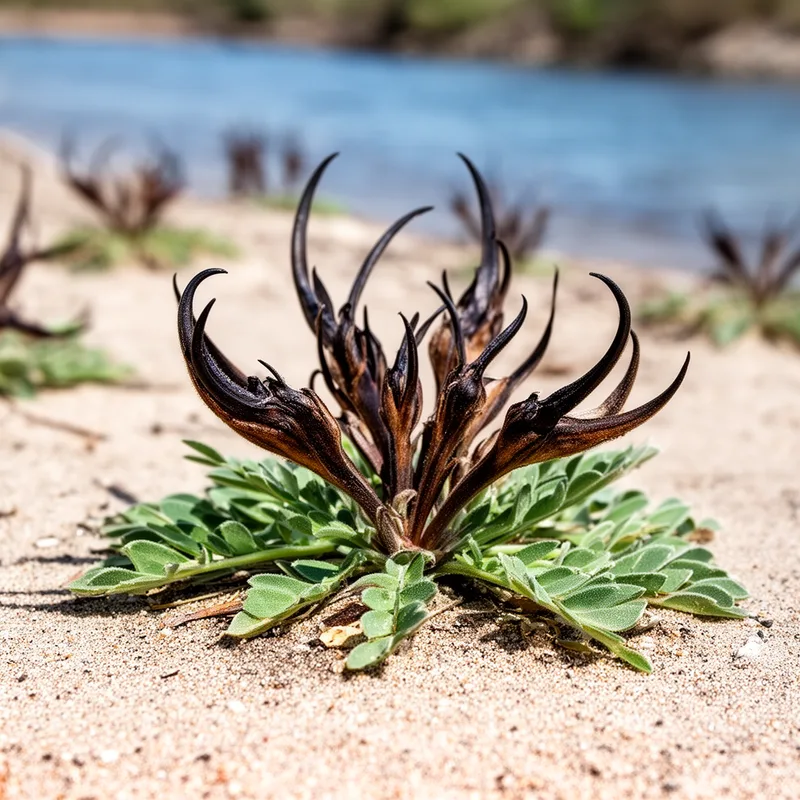
sand devil's claw
- noun
- The sand devil's claw produces distinctive hooked seed pods that catch onto animal fur.
Examples
-
We found a cluster of sand devil's claw growing in the sandy soil near the river.
-
Botanists debated whether the sand devil's claw should be classified within the genus Martynia.
-
The sand devil's claw grows well in arid regions.
-
Look at that sand devil's claw!
-
The sand devil's claw produces distinctive hooked seed pods that catch onto animal fur.
-
We found a cluster of sand devil's claw growing in the sandy soil near the river.
-
The sand devil's claw thrives in coastal areas with loose, sandy habitats.
Synonyms

A plant that lives one year with pale flowers marked with purple and a long curved seed pod

A plant with pale flowers spotted purple and a long curved seed pod like a claw

A flowering plant with unusual flowers and seed pods that grows in dry places
Surface Forms
Morphology
The phrase is compositionally transparent: 'sand' signals habitat/soil type and 'devil's claw' describes a claw-shaped object (metaphorical but directly suggesting shape). A B1 learner who knows 'sand', 'devil' and 'claw' can reasonably infer this refers to a claw-shaped plant found in sandy areas, so the overall meaning is predictable from the parts.
Etymology
Sand devil's claw gets its name from its hooked seed pods that look like a claw and from the sand where it grows, and the word devil's adds a strong image. The pods often 'catch on' animal fur as they fall, so the hooked shape explains the name and makes it easy to remember.

