
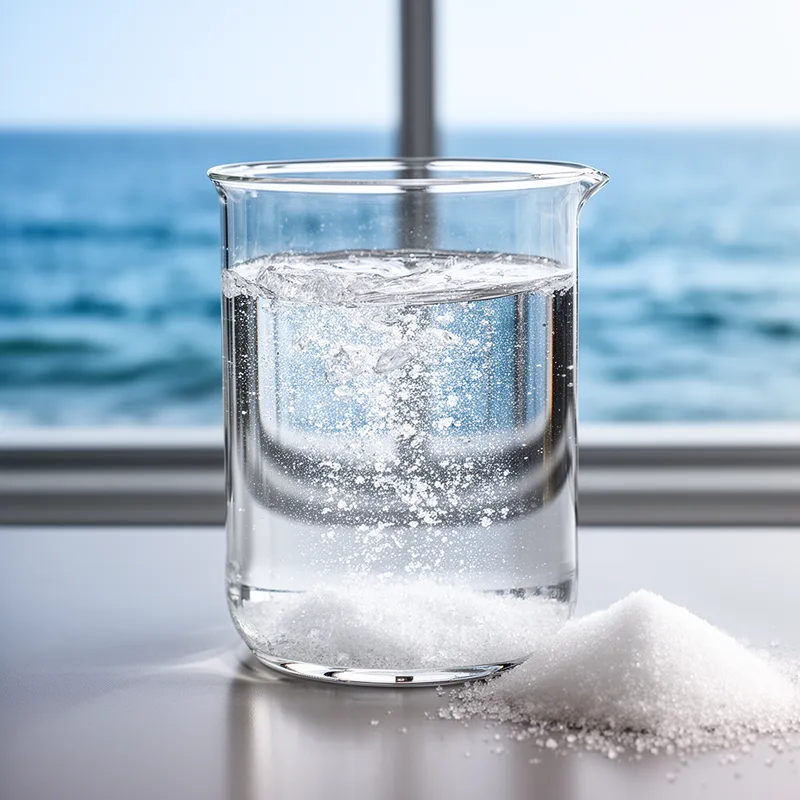
saline
 4
4.6
4
4.6

- adjective
- /ˈseɪlaɪn/
- Both species of statice were able to complete their life cycles under highly saline conditions.
- highly saline
- saline water
- saline lakes
Loading YouTube…
Watch on YouTubeAnd so Dalal is amazing because it is it's hydrothermal, really hot and super psychic salty, hyper saline.
- And so Dalal is amazing because it is it's hydrothermal, really hot and super psychic salty, hyper saline.
Examples
-
Freshwater recharge is minimal, and the groundwater is very saline.
Academic text (2003) -
At the most basic level, the answer is that these lakes are saline and their water levels are naturally and inherently unstable.
Academic text (1996) -
The water might be a little less saline at the surface than it is down deep.
-
One is a saline solution.
-
They range from slightly to highly saline and from small and relatively shallow to large and deep.
Academic text (1996) -
New technologies to reclaim contaminated or saline water may also be an important part of the equation.
Academic text (2008) -
As the water volume dropped precipitously, the lake became saline, the once thriving fishing industry died, and rainfall in the region declined drastically.
Academic text (1996) -
Another group of extremophiles, the halophiles, grow in highly saline environments like natural salt lakes and solar salt-evaporation ponds.
Academic text (2000) -
The great salt flats of the northern Yucatan Peninsula and the saline estuaries of the Pacific provided salt, which the Maya began to collect more than 2,300 years ago.
Academic text (1991) -
The saline solution is often used for rinsing wounds and is essential in many medical treatments.
Synonyms
 61
1.0
61
1.0
Tasting of salt, like sea water or chips
 6
6.4
6
6.4
Tastes slightly salty like sea water
 4
7.2
4
7.2
Slightly salty water that forms when sea water mixes with fresh water

Tastes slightly salty but not strong

Having a light taste of salt

Containing salt in rocks or soil, often in large amounts
Antonyms


Compounds

- Specialized
5
3.3
Salt water that doctors use to clean wounds or put into a vein to give fluid
How Salty

Surface Forms
Morphology
saline = salt (semi-transparent) = sal + ine
The adjective is related to 'salt' in meaning but uses the Latin combining form 'sal-' and the adjectival suffix '-ine', which can obscure the relation for some learners.
Etymology
The adjective saline also comes from the Latin root sal, meaning 'salt', so saline simply means 'containing salt' or 'salty', which is why we call salty water or soil 'saline'.