
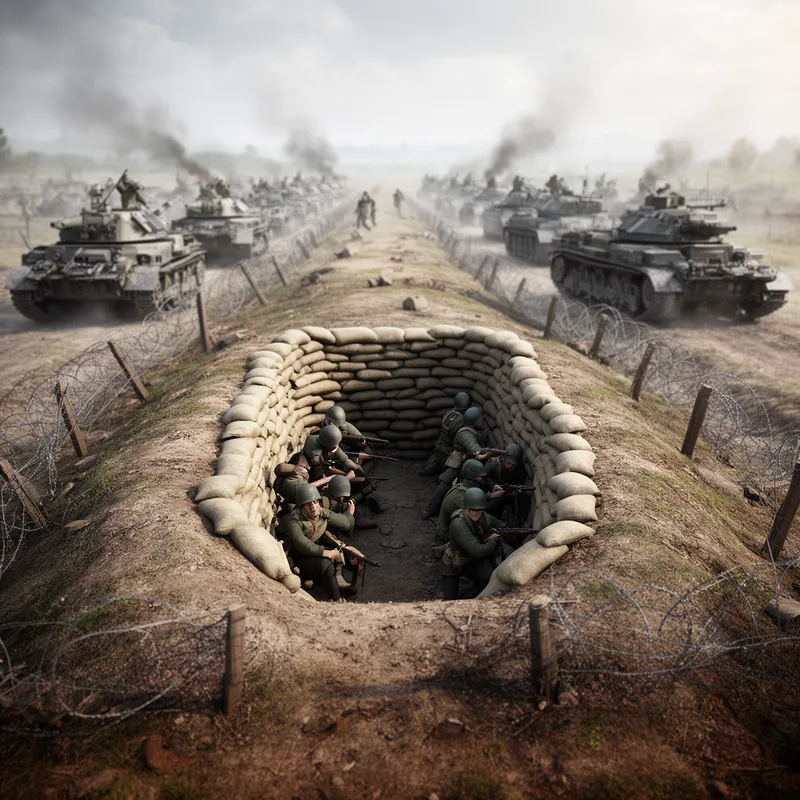
salient
 1
9.6
1
9.6

- noun
- /ˈseɪljənt/
- Specialized
- And in France, the Germans advanced along the Saint-Michel salient taking in the town of Saint Ramelle and Toulon.
- the southern salient
- German salient
- salient to the south
Loading YouTube…
Watch on YouTubeStill, straightening out the San Mihail salient was in itself a pretty big prize.
- Still, straightening out the San Mihail salient was in itself a pretty big prize.
Examples
-
The result proved to be mayhem as more Targan sections poured through the salient and overran entire groups.
Fiction book (1992) -
And then Patton, in a brilliant shift of position, launched an attack from the Ardennes salient to the south, and the Americans began to feel hope.
Fiction book (1990) -
Still, straightening out the San Mihail salient was in itself a pretty big prize.
-
And we see further South that the battle on the EEP salient was now the battle for the EEP salient.
-
So, to counter this, all vehicle movement was forbidden south of a specified road that ran across the salient of South Armagh.
Academic text (2011) -
This entire German salient, holding up the Argonne advance depends for ammunition and supplies on the Decauville Railroad, which as you know, lies just beyond these hills.
-
As Sinklar watched, the second salient breached the Nineteenth's lines and poured into the orchard.
Fiction book (1992) -
Meanwhile, unknown to Axel, the majority of Mayz's Fourth Targan would attempt to carve two salients into the defenses: one on the western gardens, the other through the eastern orchards.
Fiction book (1992) -
A battle was unfolding, the Faiengis mobilizing to greet the Veretane waiting past the Miello salient; and the Veretane escort, not Doppelganger, failed to appear in the sensors.
Fiction book (2001) -
The military strategists chose to defend the salient, knowing it was more vulnerable to enemy attacks.
Antonyms

Compounds

How Projecting

Surface Forms
Etymology
Salient comes from the Latin salire 'to leap' and is the same root you see in assault; in war it names the part of a line that 'leaps' forward toward the enemy, making it more exposed to attack.