
salamandriform
- adjective
- Specialized
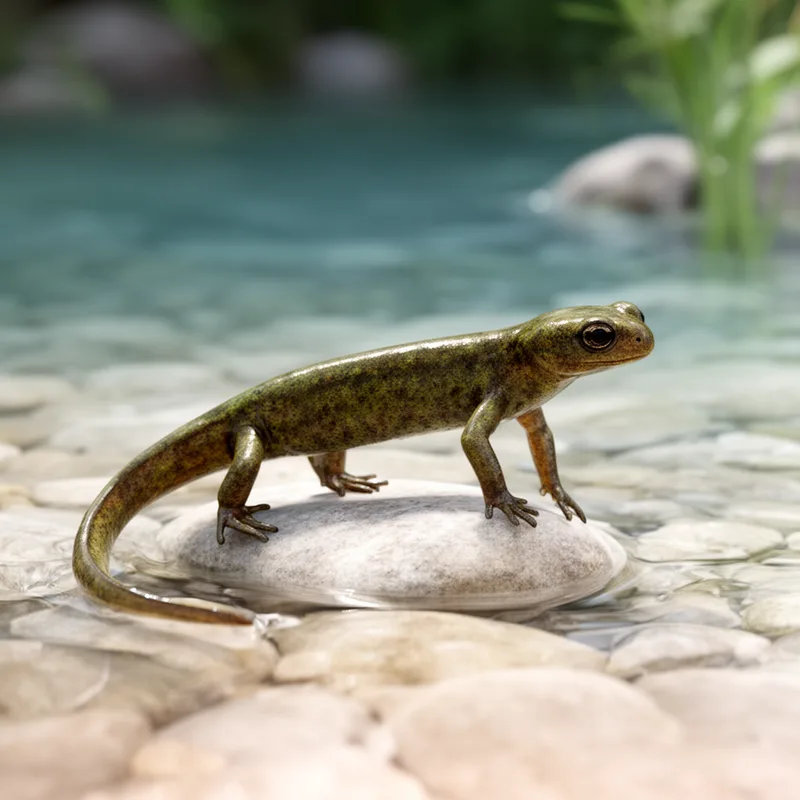
- The fossil exhibits a distinctly salamandriform body structure, with an elongated trunk and short limbs.
Examples
-
Researchers described the animal’s movements as salamandriform, closely resembling those of modern newts.
-
The artist created a salamandriform sculpture that captivated everyone.
-
In paleontology, a salamandriform skull indicates adaptation to an aquatic lifestyle.
-
Her salamandriform design was inspired by ancient mythology.
-
The fossil exhibits a distinctly salamandriform body structure, with an elongated trunk and short limbs.
-
Researchers described the animal’s movements as salamandriform, closely resembling those of modern newts.
-
In paleontology, a salamandriform skull indicates adaptation to an aquatic lifestyle.
Surface Forms
Morphology
salamandriform = salamander (semi-transparent) = salamander + iform
Meaning is predictable from 'salamander' + the technical combining suffix '-iform', but the suffix is somewhat technical and the spelling change (salamander → salamandr-) may confuse average learners.
Etymology
Salamandriform comes from the animal salamander and the ending -form, which means 'shape' or 'in the form of'. So, salamandriform describes something that has the 'shape of a salamander', a handy word for fossils or animals that look like salamanders.

