

safety fuse


 1
4.1
1
4.1
- noun
- /ˈseɪfti fjuːz/
- Specialized
- Most appliances come equipped with a safety fuse to halt the current flow if they overheat, protecting against fires.
Examples
-
The safety fuse blew during the storm.
-
The electrician replaced the blown safety fuse to restore power to the room.
-
If the current exceeds the limit, the safety fuse will break the circuit to prevent damage.
-
You should always check the safety fuse before troubleshooting other electrical issues.
-
Make sure to check the safety fuse regularly.
-
If the electrical current exceeds safe levels, the safety fuse will blow to prevent potential damage.
-
To avoid any electrical hazards, ensure that your circuit includes a reliable safety fuse that can interrupt excessive current.
Synonyms
 54
4.4
54
4.4
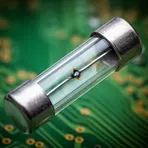
A safety wire that melts to stop electricity when current is too high
 48
4.3
48
4.3
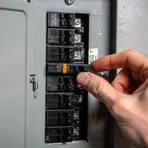
A switch that stops electricity when too much flows in a circuit
 8
3.9
8
3.9
A device that automatically stops electric current to prevent overloads
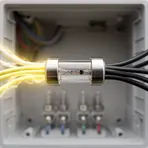
A small part with a thin wire that melts to stop dangerous electric current

A small electric part in a tube that stops electricity when too much flows
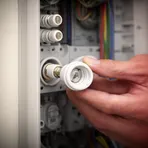
A small safety device that screws into a socket to stop too much electricity
Surface Forms
Morphology
This is a simple modifier+head compound where 'safety' describes the purpose of the 'fuse' (i.e., a fuse designed to provide safety or safe ignition). A B1 learner who knows 'safety' and 'fuse' can reasonably infer it refers to a fuse used to make ignition safer (a slow-burning or safety-designed fuse); the composition is literal and cross-linguistically common.
Etymology
Safety fuse is a thin piece of wire called a fuse that is made to melt first when too much electricity flows, so it 'breaks the circuit' and protects the rest of the system.