
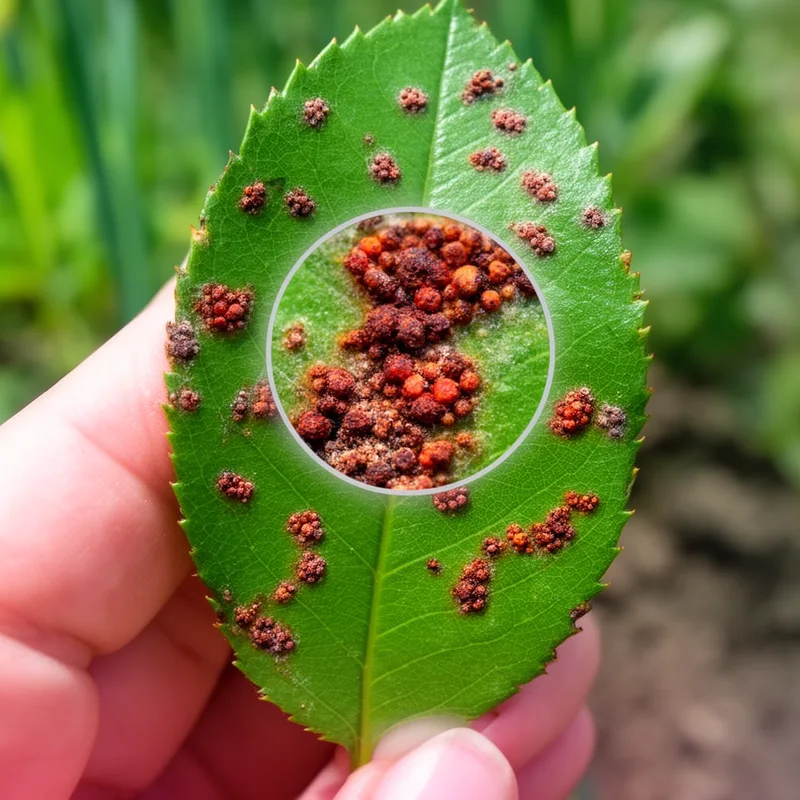
rust fungus
- noun
- /rʌst ˈfʌŋɡəs/
- Specialized
- During the research, experts discovered a new species of rust fungus that threatens local vegetation.
Examples
-
Three of the five stages in the life cycle of the rust fungus take place on berries, and the other two on pines.
Academic text (1998) -
PHOTO (COLOR): ARS plant pathologist Marcial Pastor-Corrales inoculates bean plants with spores of the bean rust fungus.
Academic text (2006) -
By observing how the various lines react to the disease, scientists are able to identify the strain of rust fungus that affects them.
Academic text (2006) -
But such defenses fail against YST rust fungus.
Academic text (2004) -
Photo (color): Mycologists Mary Palm (left) and Amy Rossman discuss the identification of a rust fungus.
Academic text (2004) -
"We are using these markers to characterize populations of the leaf rust fungus from the Middle East, Central Asia, South America, Europe, and the United States to determine their migration patterns."
Academic text (2006) -
PHOTO (COLOR): A rust-susceptible bean leaf showing pustules (fruiting structures) of the bean rust fungus.
Academic text (2006) -
Scientists study the rust fungus to understand how it spreads and affects various crops.
-
The farmer noticed brown spots on his plants and suspected they were affected by rust fungus.
How Severe


Surface Forms
Morphology
The meaning 'a fungus that causes rust disease' is directly and transparently derived from combining 'rust' (a plant disease producing brown/reddish spots) with 'fungus' (a type of organism). This compositional noun phrase follows a regular and cross-linguistically common modifier-head pattern, so a B1 learner who knows both constituents will readily infer the MWE meaning.
Etymology
Rust fungus gets its name from the rusty-looking red or brown spots the fungus makes on plant leaves. The word rust describes that color and fungus is the living thing, so the name means a fungus that causes a 'rust' disease.