
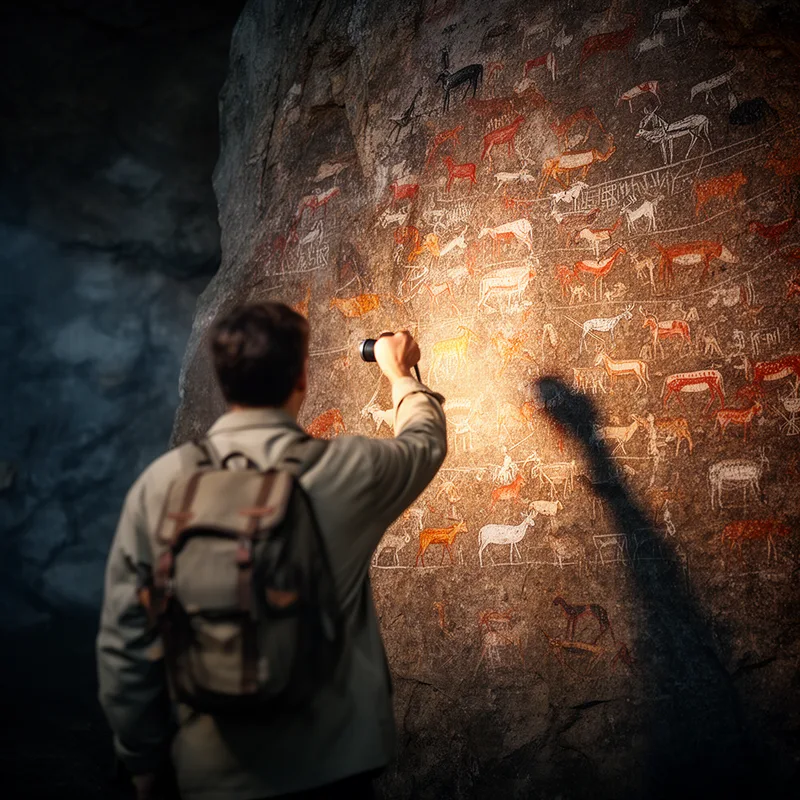
rupestrian
- adjective
- /ruˈpɛstrɪən/
- Specialized
- The ancient rupestrian art in the cave amazed the archaeologists.
- rupestrian art
Examples
-
The archaeologists discovered rupestrian paintings that revealed details about ancient life.
-
Many tourists visit the region to see its famous rupestrian art sites.
-
Scholars study rupestrian engravings to learn about early human communication.
-
Many rupestrian paintings can be found in southern France.
-
The ancient rupestrian paintings beautifully depict the daily lives of early humans.
-
Archaeologists discovered rupestrian carvings that date back thousands of years.
-
Many tourists visit the cliffs to see the stunning rupestrian art created by prehistoric cultures.
Synonyms
Made on rock like cave paintings or carvings
Living, growing, or written on rocks like plants and paintings
Surface Forms
Morphology
rupestrian = rupestr + ian
The root is a non-productive Latin combining form meaning 'rock' and is not recognizable to typical learners; the specific archaeological sense (rock art) is therefore not derivable from familiar English morphemes.
Etymology
Rupestrian comes from the Latin rupes, meaning 'rock' or 'cliff'. A helpful way to remember it is to imagine paintings or carvings made directly on cave walls or cliffs, so rupestrian describes rock art.

