
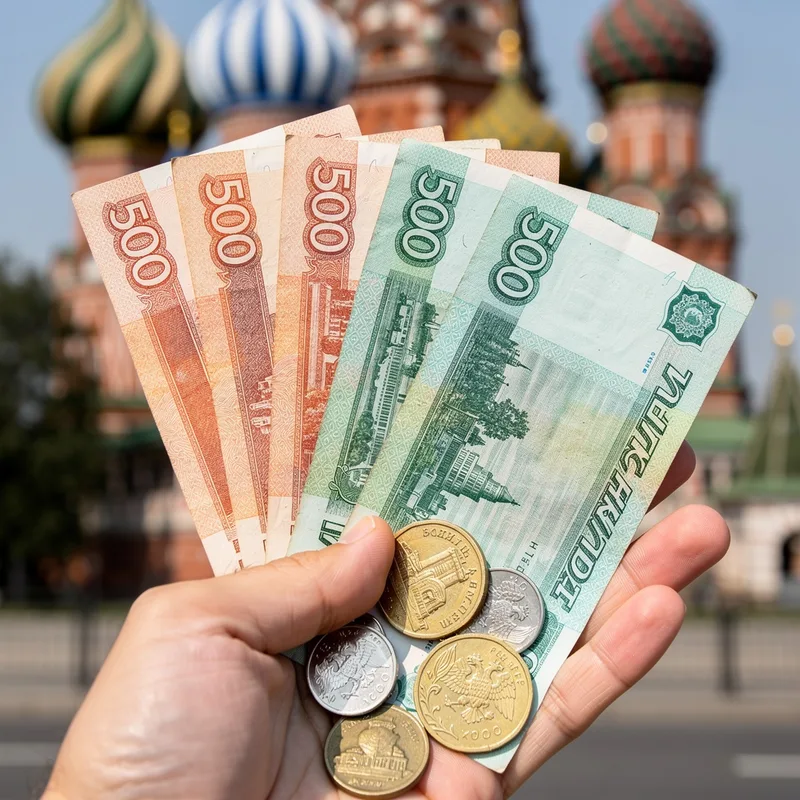
ruble
 33
3.7

- noun
- /ˈruːbəl/
- The price of the camera is 15,000 rubles, which is a bit above my budget.
- Russian ruble
- one ruble
- rubles to the dollar
Loading YouTube…
Watch on YouTubeYou'll collapse, the ruble will collapse, your country will fall apart.
- You'll collapse, the ruble will collapse, your country will fall apart.
- Well, there are a few reasons for the ruble strength.
- So when Russia sells oil to India, they're trading oil in exchange for the rubles that India's had in their foreign reserves.
- And now that Putin has kind of fixed how much gold the Central Bank of Russia is willing to buy priced in rubles.
- Let us cut convertibility between the ruble and the pound and the ruble and the dollar.
- The Russians have are now bringing out the digital ruble.
- But now there are rumors that Putin's going to say, well, by the way, you want Russian wheat rubles, you want corn ruples, you want neon ruples.
Examples
-
Part of the plan was to give every Russian citizen a 10,000-ruble voucher for shares in the newly privatized companies.
Academic text (2011) -
Factory employees earn over 220 rubles per month, more money than some of the professional staff earn.
Academic text (1991) -
Not one ruble have I lost, not one.
-
The dollar is still going to be king and your ruble not so much.
-
So what's happened to the state of the ruble now?
-
So it's not like we have a strong ruble, but it has strengthened recently.
-
As a result of the sanctions, the ruble halved in value within two weeks.
-
The official exchange rate at the time of our visit was 60 rubles for $100.00.
Academic text (1991) -
Russians are understandably distrustful of the ruble and sensitive to the tremendous uncertainty created by their central bank.
Academic text (2000) -
Russian trade with Iran, expressed in gold rubles, about doubled between the early 1830s and mid-1860s.
Academic text (1993)
Surface Forms
Etymology
Ruble comes from an old Russian verb rubit, which means 'to chop' or 'cut'. Originally people would cut a piece off a silver bar to make a coin, so a ruble was a 'cut piece' and that is how the name came to mean the money used in Russia today.