

royal velvet plant
- noun
- Australian
- The royal velvet plant is prized for its striking purple leaves in many gardens.
Examples
-
She bought a royal velvet plant to add a vibrant touch to her indoor collection.
-
The royal velvet plant thrives in humid conditions.
-
Because of its velvety texture, the royal velvet plant stands out among other houseplants.
-
I bought a royal velvet plant for my living room.
-
The royal velvet plant is known for its beautiful purple leaves, making it a popular choice for houseplants.
-
To create a lush indoor garden, she carefully placed a royal velvet plant next to her other tropical plants.
-
The royal velvet plant adds a unique texture and color to the room with its vibrant, velvety foliage.
Synonyms
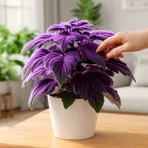
A tropical plant that people grow for its soft, velvety leaves covered in purple hairs

A tropical houseplant with soft leaves covered in short purple hairs

A tropical plant with soft leaves covered in purple hairs and grown for decoration
Surface Forms
Morphology
All three words are literal descriptive elements—'royal' (suggesting regal/striking appearance), 'velvet' (indicating a soft, velvety texture or appearance), and 'plant'—so a learner who knows the constituents can infer this refers to a plant with velvety, possibly striking leaves. The adjective+adjective+noun composition is a common, compositional pattern cross-linguistically, making the overall meaning directly derivable from the parts.
Etymology
Royal velvet plant may come from the look of its leaves: their soft, purple hairs make them look like rich velvet fit for something royal. So the name now helps you remember it is a plant with soft, purple, velvety leaves.

