
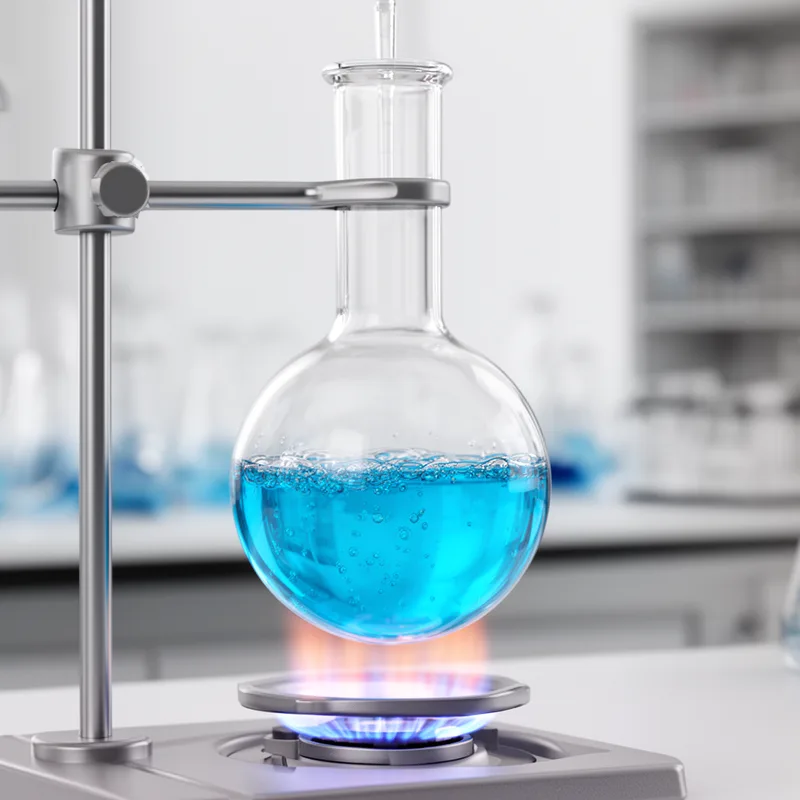
round-bottom flask
- noun
- /ˈraʊndˈbɑːtəm flæsk/
- Specialized
- The chemist carefully mixed the reagents in a round-bottom flask to create the desired reaction.
Examples
-
In the laboratory, we heated the solution in a round-bottom flask to ensure even heat distribution.
-
To do this you will need some methylene chloride, a round bottom flask, and some silica gel.
-
To do this you will need some methylene chloride, a round bottom flask, and some silica gel.
-
A total of 10 mL of the chloroform layer was transferred into a dry, pre-weighed round-bottom flask.
Academic text (2015) -
For the experiment, use a round-bottom flask to prevent the liquid from splashing out during stirring.
Synonyms
 57
3.2
57
3.2

A container that holds liquids like a bowl or cup
 24
3.7
24
3.7
A narrow-necked bottle used to hold liquids, like in labs or for alcohol
How Mixable
- Specialized
13
3.7

- Specialized
1
5.1
- Specialized
- Specialized
18
2.8
Surface Forms
Morphology
round-bottom + flask
The meaning is directly derivable from its parts: 'round-bottom' (a rounded lower shape) modifies 'flask' (a container), so the phrase simply denotes a flask with a rounded bottom. This is a transparent noun‑modifier compound following common English composition patterns and is cross‑linguistically obvious, so a B1 learner who knows the constituent words will understand it.
Etymology
Round-bottom flask gets its name from its shape: a glass vessel with a round bottom and a narrow neck. Because the round bottom helps heat spread evenly and liquids mix well, the name reminds us it is 'used in labs' for heating and mixing chemicals.