
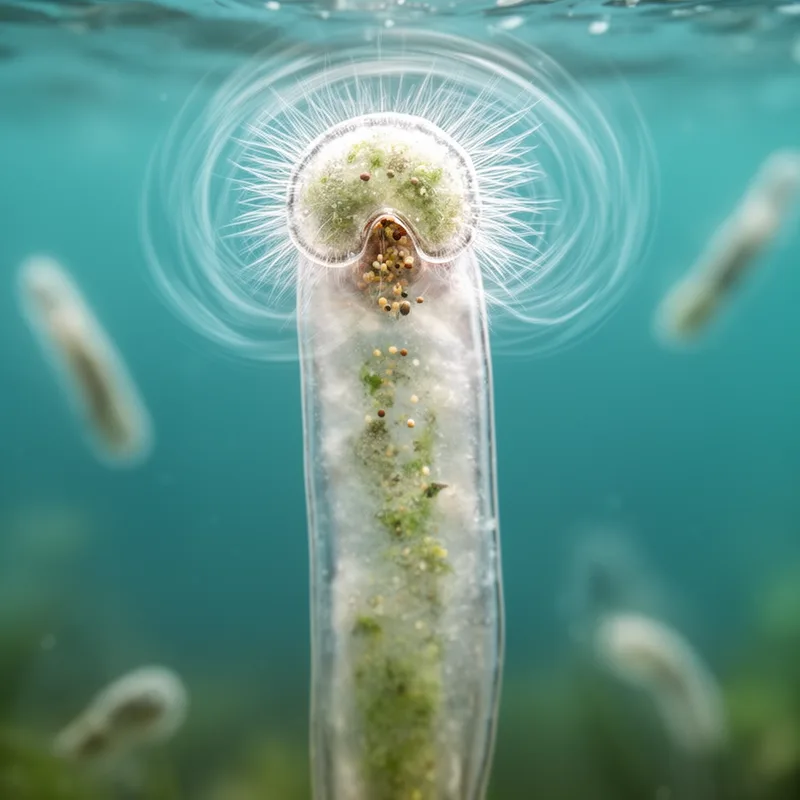
rotifer


 1
9.9
1
9.9
- noun
- /ˈroʊtɪfər/
- Specialized
- Tanks are filled with saltwater and a starter population of rotifers.
- rotifers and tardigrades
- rotifers and nematodes
- rotifers and protozoans
Examples
-
The harsh conditions limit stream fauna to nematodes, rotifers, and tardigrades.
Academic text (1999) -
Soon I find the rotifers—furiously alive, almost transparent little animals, churning powerfully along in their native ocean.
Fiction book (2002) -
The collected rotifers are then used for fry feed in indoor tanks.
Academic text (2004) -
Once there are 1,500 rotifers per milliliter, a third of the culture can be harvested daily.
Academic text (2004) -
Some species of rotifers, for example, will grow long spines in the presence of larger, predatory rotifers.
Academic text (1992) -
Ludwig determined that sunshine bass must be stocked just before rotifers dominate.
Academic text (2004) -
Sunshine bass farmers can estimate how long it takes to get a rotifer bloom in fry culture ponds, which helps them stock at the optimal time.
Academic text (2004) -
Within lakes of the McMurdo Dry Valleys, rotifers and predatory ciliates are the top consumers in the water column.
Academic text (1999) -
In many freshwater environments, rotifers play a crucial role in the food web as they serve as food for small fish.
-
Scientists often study rotifers to understand their adaptations in various aquatic ecosystems.
Surface Forms
Etymology
Rotifer comes from Latin parts rota 'wheel' and fer 'to carry'. This tiny water animal has a ring of tiny hairs that spins like a little wheel, so a rotifer is a 'wheel-bearer' and gets its name from that wheel-like feeding organ.