

rotary joint
- noun
- /ˈroʊtəri dʒɔɪnt/
- Specialized
- Robotic arms often mimic the movement of a rotary joint to achieve greater flexibility.
Examples
-
The rotary joint allows for smooth arm movement.
-
In anatomy class, we studied how the radius and ulna form a rotary joint in the forearm.
-
The elbow contains a rotary joint that allows the arm to twist and turn objects.
-
A human arm contains a rotary joint between the radius and ulna.
-
The robotic arm has several rotary joints that allow it to move smoothly and precisely.
-
In our engineering class, we learned about rotary joints used in various machinery to facilitate rotational movement.
-
The design of the model included a rotary joint that enabled the arm to rotate 360 degrees.
Synonyms
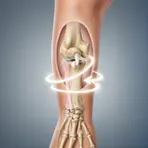
A joint that lets one bone rotate around another, like in the forearm

A joint that lets one bone turn around another bone

A joint in the body that lets a bone turn only around one straight line

A place where two bones meet and move like a hinge in one direction
How Rotatable


Surface Forms
Morphology
The phrase 'rotary joint' is compositionally transparent: 'rotary' means rotating around an axis and 'joint' is a point of articulation, so the combined meaning (a joint that allows rotation around an axis) is directly derivable from the parts. This adjective+noun pattern is common across languages and follows standard English compounding, so a B1 learner who knows both constituents would readily understand the term.
Etymology
Rotary joint comes from rotary ('turning') and joint ('where two parts meet'), so picture two joined parts that turn around a single line, like a door hinge or the forearm bones. That's why rotary joint means a joint that only allows turning or twisting.