
rostrum
- noun
- /ˈrɒstrəm/
- Specialized
- During mating season, the male's rostrum becomes more pronounced, aiding in attracting females.
Examples
-
Researchers noted that the rostrum of the sawfish is crucial for locating prey buried in the sand.
-
These marks are lost within the first few months of life, as are small whiskers that line each side of the upper rostrum.
Academic text (1992) -
The mother then uses her tail and her rostrum to guide the calf to a traveling position just below her dorsal fin.
Academic text (1992) -
At the U.N. Millennium Assembly in New York in September, leader after leader took the rostrum to give explicit or implicit support to the Brahimi prescriptions.
Academic text (2000) -
That along with the long mustache like nasal barbells located about midway down the rostrum, help the saw shark locate buried prey.
-
Bumpus (1901a) tagged 497 female lobsters (with eggs recently removed) with copper tags attached to their rostrums.
Academic text (1999) -
In November 1995, at the end of a demonstration whose theme was "Yes to Peace, No to Violence," the prime minister of Israel, Yitzhak Rabin, was murdered while making his way down the steps behind the speakers' rostrum at the Malachei Yisrael Square in the very heart of Tel Aviv.
Academic text (2000) -
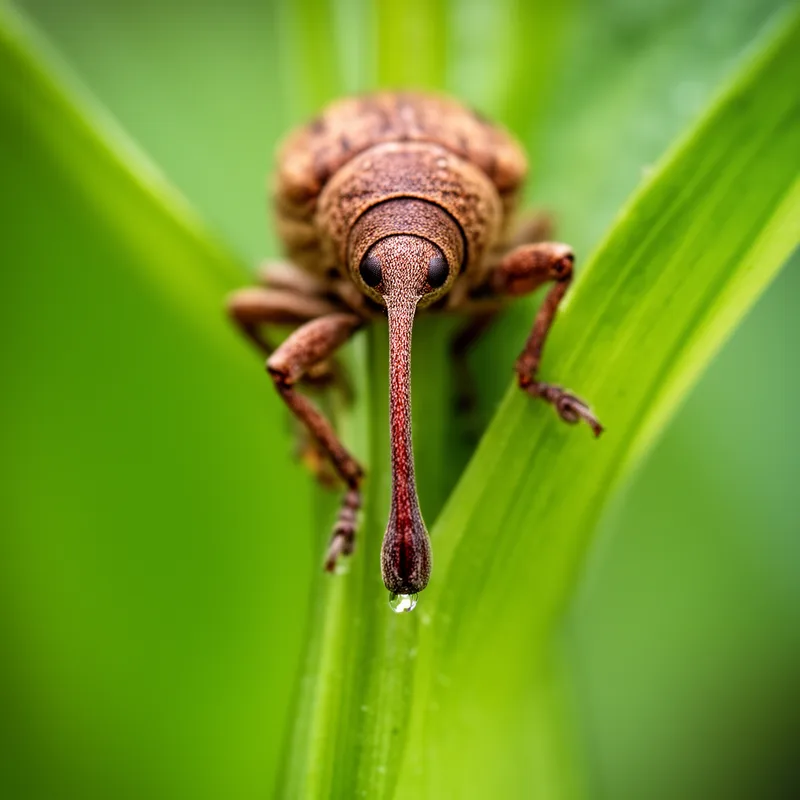
The rostrum of the weevil is distinctly shaped, resembling a small beak that extends from its head.
Synonyms

 25
3.2
25
3.2

The long part that sticks out from an animal's head and includes the nose and jaws
How Projecting

Surface Forms
Etymology
Rostrum comes from the Latin rostrum meaning 'beak', the same idea as an animal's beak or a ship's point, and scientists used this word for a beaklike mouthpart on some insects. So an insect rostrum is a long, beaklike part used for feeding or piercing.