
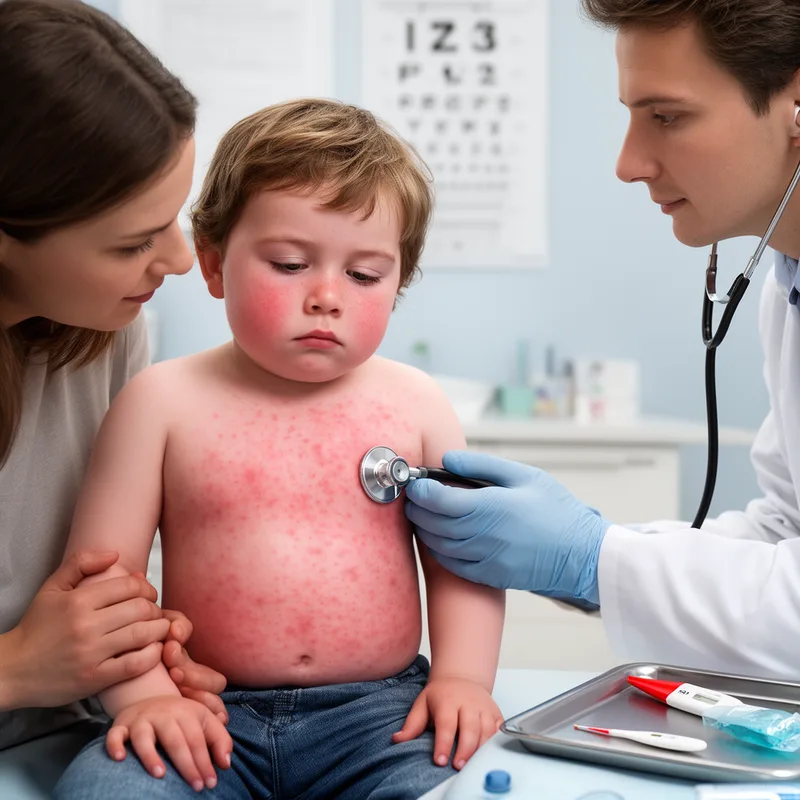
roseola


 1
9.8
1
9.8
- noun
- /roʊˈziːələ/
- Specialized
- roseola rash
Examples
-
Children with roseola are well at this stage.
Academic text (2012) -
Kawasaki disease presents with a red rash and fever, which may be initially indistinguishable from other lesser causes of fever and rash such as roseola, fifth disease, measles, rubella, and even meningococcal disease.
Academic text (2012) -
The child developed a red rash after a few days of high fever, indicating he may have roseola.
-
After experiencing a sudden fever, the doctor confirmed that she had roseola when the rash appeared.
-
Parents should be aware that roseola is often marked by a rash following a high fever in young children.
Synonyms
 128
2.7
128
2.7
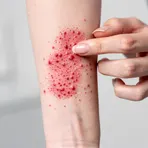
A group of red spots on the skin caused by illness or allergy
 4
3.0
4
3.0
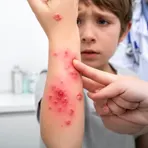
A red, itchy area on the skin that may have spots or bumps
 1
4.9
1
4.9
Raised red or swollen patches that suddenly appear on the skin
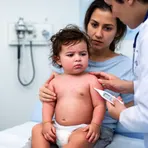
A short illness in babies and young children with sudden high fever then a pale pink rash
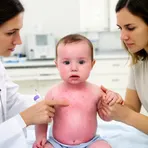
An illness that begins with a sudden high fever and a short pink rash
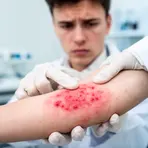
A red skin rash that appears as a sign of illness
Compounds
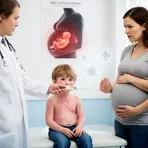
- Specialized
A contagious viral illness that causes a short fever and rash and can harm an unborn baby early in pregnancy
- Specialized
An illness that begins with a sudden high fever and a short pink rash
- Specialized
A short illness in babies and young children with sudden high fever then a pale pink rash
How Severe

Surface Forms
Etymology
The word roseola comes from the Latin roseus 'rosy' and the small ending -ola 'little', so it literally means 'little rose'. That's why roseola is used for the pinkish or red skin rash often seen in young children.