
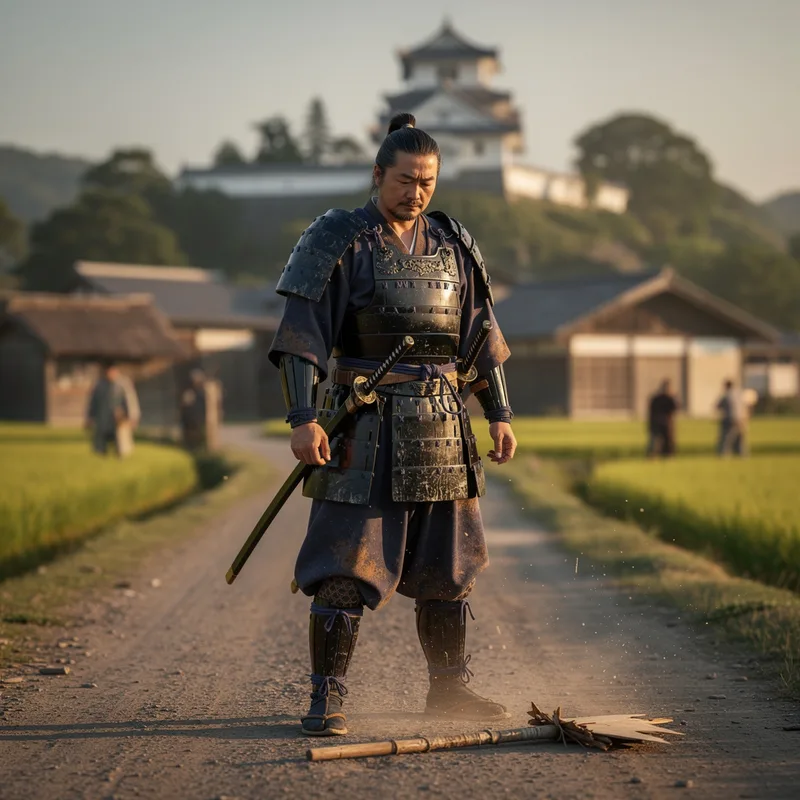
ronin
 3
9.9
3
9.9

- noun
- /ˈroʊnɪn/
- During the Edo period in Japan, many ronin roamed the countryside, searching for new masters after losing their lords.
- a masterless ronin
- the 47 ronin
Loading YouTube…
Watch on YouTubeAnd and what happened was that Daimyo employed spies to see if these Ronins were walking to Bushido code, are they going to take back revenge?
- And and what happened was that Daimyo employed spies to see if these Ronins were walking to Bushido code, are they going to take back revenge?
Examples
-
The legend of the 47 ronin showcases their bravery and loyalty, symbolizing the samurai spirit.
-
I AM A RONIN, A MASTERLESS SAMURAI.
-
Your grandfather called me a ronin.
-
And yet, to know the story of the 47 Ronin, is to know the story of all Japan.
-
The memory of the 47 Ronin who put duty and justice before their fear of death has lived down through the centuries as one of the greatest examples of honour and loyalty in Japanese culture.
-
These are the masterless ones, the ronins, the ones who have broken the lineage.
-
That day, more than any other, I fancied myself a ronin; a solitary soldier in service to a ghostly lion prince.
Blog text (22) -
In the stories of old Japan, a ronin often had to rely on his own skills to survive without a master.
Surface Forms
Etymology
Ronin comes from the Japanese rōnin, made of rō 'wave' and nin 'person'. It paints the picture of a samurai who drifts like a wave after losing his lord, so it means a samurai with no master.