
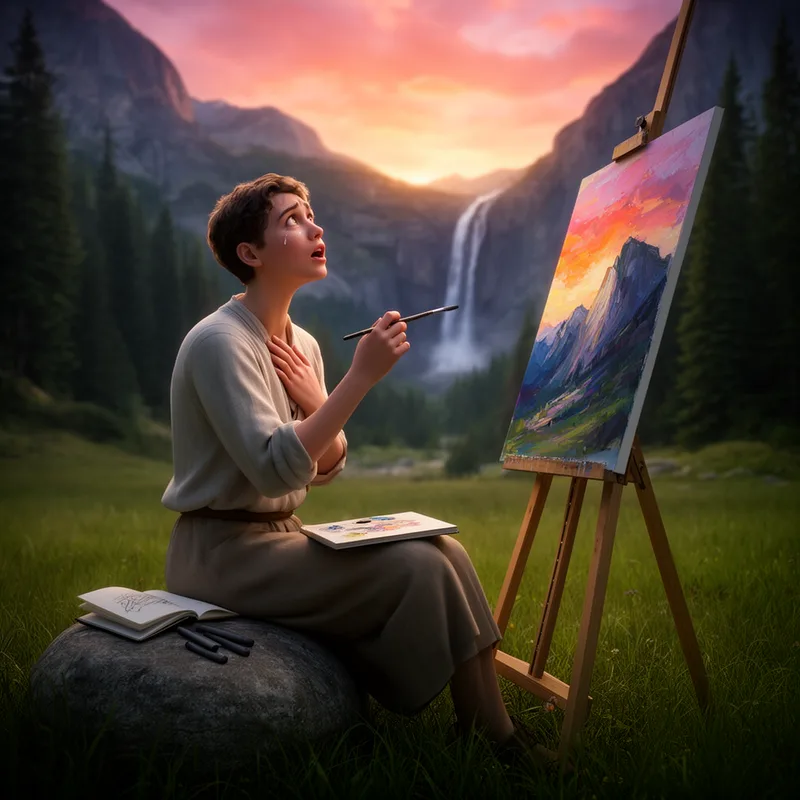
romanticist


 1
7.7
1
7.7
- noun
- /roʊˈmæntɪsɪst/
- Literature
- In urging us to "feel" rather than just "know," he urges us to return to the Romanticists' world of moods and passions: "let us restore to our thinking about history and about historical writing."
- romanticists' world of moods
- romanticists' world
Loading YouTube…
Watch on YouTubeThis is a near romanticist work by an artist named Pierre Nu Grand, who is brilliant, brilliant.
- This is a near romanticist work by an artist named Pierre Nu Grand, who is brilliant, brilliant.
Examples
-
Many people consider John Keats a significant romanticist due to his emphasis on individual experiences and feelings.
-
And now our first respondent is a wonderful romanticist who teaches at Tufts University.
-
The pioneering southern Romanticist William Gilmore Simms made a similar observation five years later in his second "Thle-Cath-Cha" essay.
Academic text (2015) -
The key phrase in the pamphlet ("by their very contradictions they are made to correspond") marks Melville's romanticist imagination.
Academic text (1994) -
The nature of the lyric has been a touchstone for Romanticist scholarship since well before M. H. Abrams first described the "Greater Romantic Lyric" in 1965.
Academic text (2016) -
Surely Levinson's reading of Wordsworth's great self-reflective poem does epitomize a shift in the way many members of the younger generation of Romanticists are approaching their subject.
Academic text (1990) -
The artist, known as a romanticist, often draws inspiration from nature and emotion in his paintings.
-
In his writings, the romanticist expressed a deep appreciation for the beauty of the natural world.
Synonyms
 1
6.3
1
6.3
An artist or writer from the 1800s who valued strong feeling and individual ideas
Antonyms


Surface Forms
Morphology
Etymology
Romanticist comes from romantic, which comes from romance meaning 'a story with strong feeling'. In the late 1700s and early 1800s, artists and writers who loved emotion, nature and imagination were called Romantics, so a romanticist is someone who follows that artistic movement and values feeling over reason.