
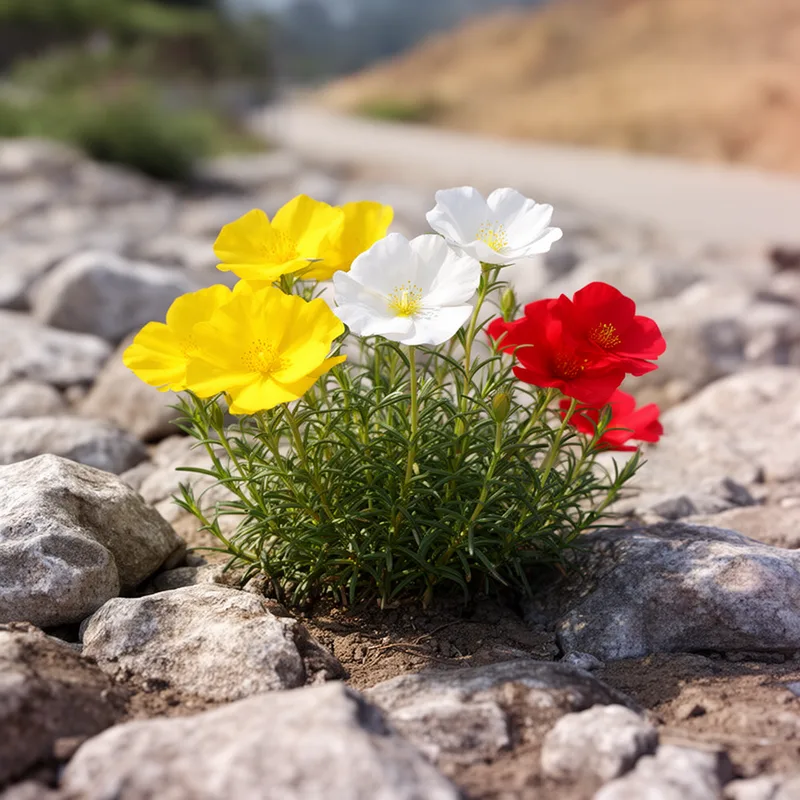
rock rose
- noun
- /rɑk roʊz/
- Gardeners often choose rock rose for its colorful, long-lasting blossoms.
Examples
-
The rock rose thrives in dry, rocky soils with plenty of sunlight.
-
A cluster of rock rose blooms brightened the edge of the garden path.
-
The rock rose blooms beautifully in the spring.
-
Many rock roses can survive in rocky soil.
-
The garden was filled with colorful rock roses that bloomed vibrantly in the sunlight.
-
She admired the delicate petals of the rock rose as it thrived in the rocky soil.
-
During our hike, we spotted a patch of rock roses growing along the cliffside.
Synonyms

A small plant with bright flowers that grows on dry, rocky ground

A plant with small yellow flowers that grows in dry rocky places

A low bush with flowers like roses that grows in dry, sunny places
Surface Forms
Morphology
The compound is compositionally transparent: a B1 learner who knows 'rock' and 'rose' can reasonably infer it denotes a type of rose/rose-like plant associated with rocks or rocky habitats. This follows a common noun+noun modifier pattern (rock modifies rose) and aligns with cross-linguistic compounding of habitat + plant, so the meaning is readily derivable from the parts.
Etymology
Rock rose comes from a small plant that grows on rocky ground and has bright flowers that look like tiny roses. So people call this 'small flowering plant' a rock rose because of its rose-like blooms and its rocky home.

