
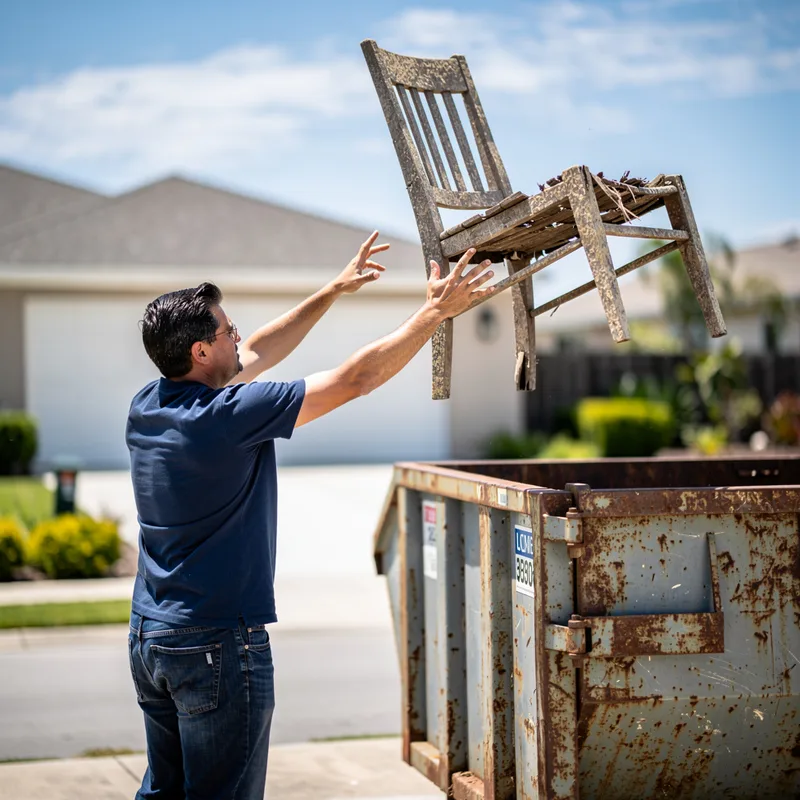
riddance
 36
6.8
36
6.8

- noun
- /ˈrɪdəns/
- "Good riddance to bad rubbish," he muttered, using his mother's favorite phrase.
- good riddance
Loading YouTube…
Watch on YouTubeHe just died of he just died and good riddance.
- He just died of he just died and good riddance.
- We sent Donald Trump packing and good riddance.
- Or if it's your family, it's the family that says good riddance.
- Either way, you've got to understand that if he was not treating you the way that you deserve, good riddance, plain and simple.
- So good riddance to bad garbage then, right?
- I've read some of the comments and it was good riddance.
Examples
-
But, so far as anyone can reasonably predict, the draft itself is gone forever, and good riddance.
Academic text (2003) -
I was so sorry to hear about Steve, but I say, good riddance.
-
For the government official who committed these papers to the deep, it was good riddance and a relief.
Academic text (1999) -
So good riddance to bad garbage then, right?
-
Good riddance to bad rubbish!
-
"Good riddance," is what Rita had to say about the men who had been in her life.
Fiction book (1993) -
Either way, you've got to understand that if he was not treating you the way that you deserve, good riddance, plain and simple.
-
As for his stepfather, Armando, he would probably say good riddance, one less mouth to feed.
Fiction book (1996) -
"All right, good riddance," Grandfather Darnell told him bitterly the day he left.
Fiction book (2001) -
After years of frustration with the old system, the company finally achieved good riddance to outdated practices.
Synonyms
 281
4.1
281
4.1
Removing people or things from a place
 106
2.0
106
2.0
Taking something or someone away from a place
 77
3.5
77
3.5
The act of removing something you do not need
 54
3.0
54
3.0
The act of getting rid of something you do not want
 39
6.1
39
6.1
A forced removal of a person from a place or group
 26
3.6
26
3.6
Leaving someone or something and not coming back
 26
2.6
26
2.6
Getting rid of things you do not want
 23
5.5
23
5.5
Forcing someone or something out of a place quickly
 19
7.4
19
7.4
Removing someone from a place like a home by force or law
 15
7.8
15
7.8
A sudden removal of people from an organization for political reasons
 7
3.2
7
3.2
Giving people permission to leave a room or meeting
 4
4.9
4
4.9
Removing unwanted people or practices to improve an organization
 1
7.0
1
7.0
To remove someone from a job or role, often by force
 1
4.4
1
4.4
Losing a job because you are fired

An action that takes something away

The official act of removing someone from a job or position
How Complete

Surface Forms
Morphology
Etymology
Riddance comes from the simple English verb rid, which means 'to free' or 'to get rid of', plus the noun ending -ance. So riddance is the act or result of getting rid of something unwanted.