
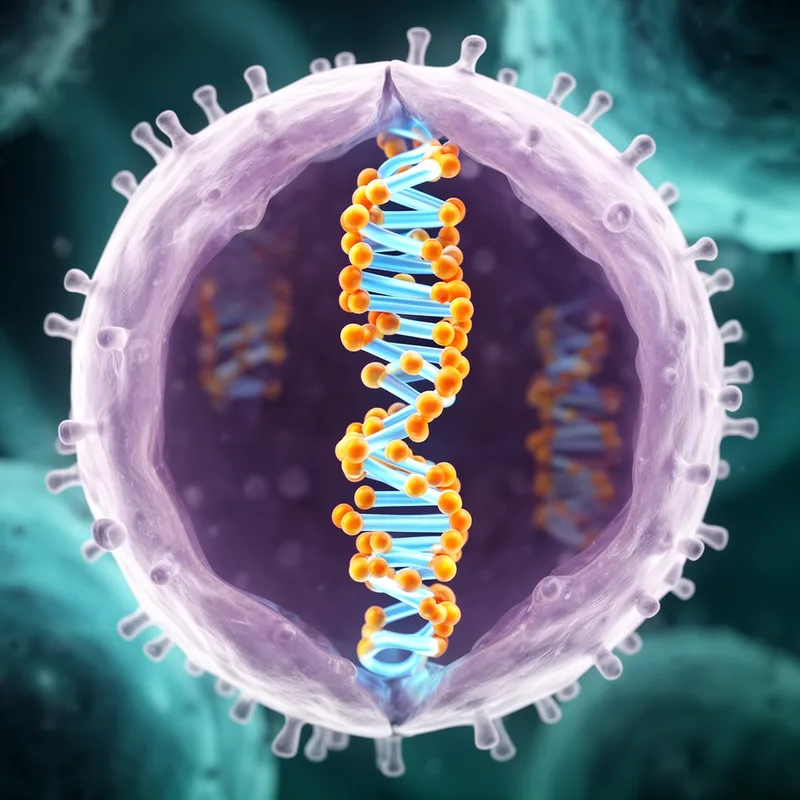
ribonucleoprotein


 1
8.0
- noun
- /ˌraɪboʊˌnjuːkliˈproʊtiːn/
- Specialized
- The ribonucleoprotein complex is essential for synthesizing proteins in the cell nucleus.
Examples
-
Scientists studied the ribonucleoprotein associated with the influenza virus to understand its infectivity.
-
Researchers discovered a new ribonucleoprotein that plays a critical role in viral replication.
-
Telomerase is a ribonucleoprotein complex that keeps the ends of replicating chromosomes from shrinking in continually dividing cells, such as those in the germline and in highly proliferative tissues.
Academic text (1998) -
Chromosomes keep from shrinking in some cells, including cancer cells, thanks to telomerase, a ribonucleoprotein with three components: a catalytic protein portion with reverse transcriptase activity, an RNA template, and an associated protein called telomeric repeat binding factor.
Academic text (1998)
Surface Forms
Morphology
ribonucleoprotein = nucleoprotein (semi-transparent) = ribo + nucleo + protein
The word is a straightforward scientific combination meaning 'ribo- (relating to ribonucleic acid) + nucleoprotein', but the combining forms are technical and may be unfamiliar to general learners.
Etymology
Ribonucleoprotein is made of parts that mean 'RNA' and 'protein': ribo- and nucleo- point to the RNA or the cell's 'nucleus', and protein is the same word we use for body 'protein'. So, a ribonucleoprotein is a molecule made of RNA and protein found in cells or viruses.