
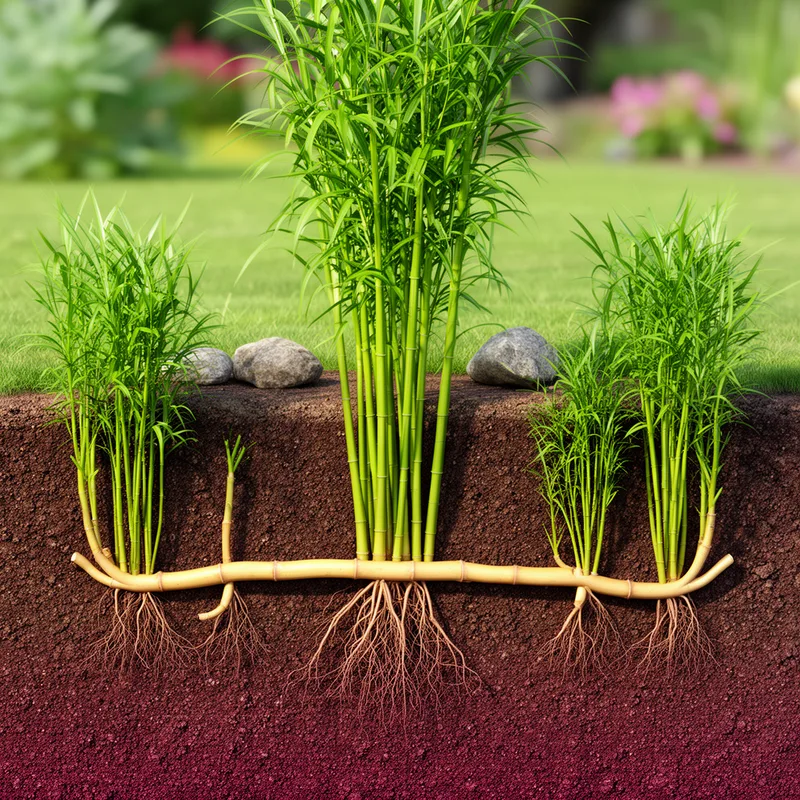
rhizomatous
- adjective
- /raɪˈzoʊmətəs/
- Specialized
- Although it can be done, dividing Pacific Coast iris can be a bit risky because cutting into the rhizomatous roots can lead to fungus problems.
- rhizomatous perennial
- rhizomatous grasses
- rhizomatous growth
Examples
-
The rhizomatous nature of certain grasses helps them recover quickly after being cut.
-
Many garden plants are rhizomatous, allowing them to spread and thrive in a variety of conditions.
-
However, once recruitment has occurred, the plants typically expand by rhizomatous growth.
Academic text (2012) -
Usually rhizomatous, these leafy species require little attention and discourage the evil eye.
Academic text (1990) -
In this respect, seagrasses are similar to many other rhizomatous terrestrial and aquatic monocotyledons.
Academic text (2012) -
Miscanthus is a genus of rhizomatous perennial C4 grasses native to the tropics and subtropics.
Academic text (2008) -
Giant reed is a rhizomatous perennial C3 grass native to East Asia and the Mediterranean coast and is considered one of the largest grass species (Lewandowski et al. 2003).
Academic text (2008) -
In contrast, Z. marina spreads locally by rhizomatous growth (Laushman 1993) but has no principal means of long-distance dispersal other than by seeds (fruits).
Academic text (1996) -
In many aquatic plants, particularly marine angiosperms, strongly rhizomatous growth forms (Figure 2a) help to resist the damaging forces of waves and tidal currents (Hartog 1970).
Academic text (1996) -
Creeping thyme is a rhizomatous plant that can form dense mats of greenery in the garden.
Synonyms

A system that has many connections and no central leader
Compounds

- Specialized
A plant that spreads by creeping stems and has attractive leaves
How Root-Like

Surface Forms
Morphology
Etymology
Rhizomatous comes from the Greek root rhizo-, which means 'root' and appears in the word rhizome. It describes plants that send out stem-like parts sideways under the ground, so the word means 'having or like rhizomes' and helps you remember that these plants spread underground.

