
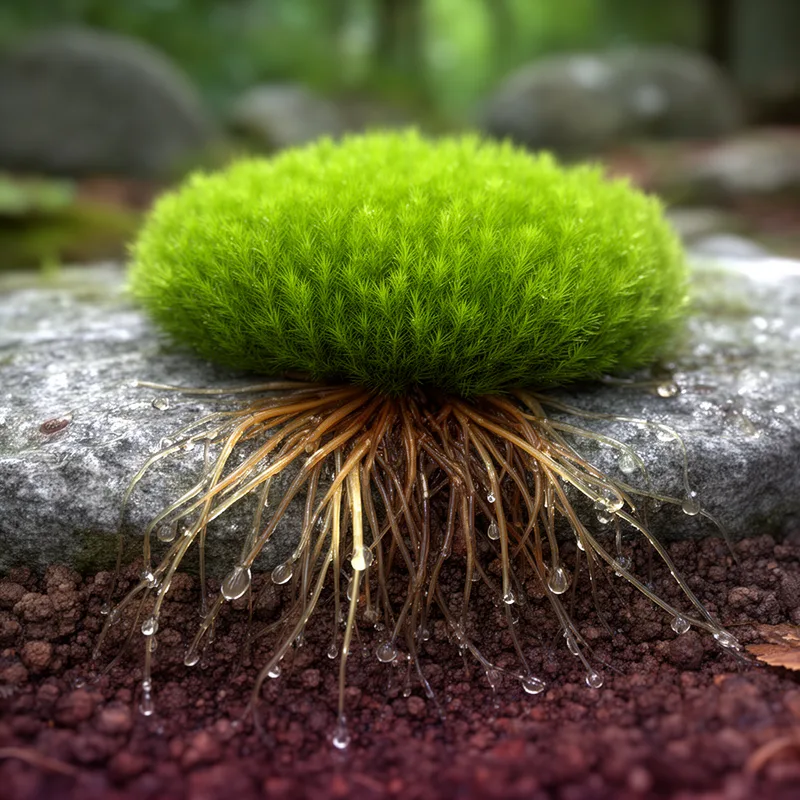
rhizoid
- noun
- /ˈraɪˌzɔɪd/
- Specialized
- Fungi use rhizoids to attach to their substrate and gather essential moisture from the environment.
Examples
-
At 4-5 DFS, small green tongue-shaped gametophytes with clear, threadlike rhizoids can be seen emerging from the cracked spore coat.
Academic text (1998) -
We know that the plant forms structures called rhizoids that could produce new growth.
Academic text (2001) -
In testing the viability of the rhizoids after the aboveground parts of the plant have been killed, Anderson is collaborating with Susan Williams, director of the University of California at Davis Bodega Marine Laboratory, just north of San Francisco.
Academic text (2001) -
The moss anchors itself to the soil with rhizoids, which help it absorb water and nutrients.
-
As the fern matures, it develops rhizoids that secure it to the ground while drawing in nutrients.
How Root-Like


Surface Forms
Morphology
rhizoid = rhizo (opaque) = rhizo + oid
The base is a technical combining form rather than a common English word, so an average B1 learner is unlikely to infer 'root-like' from the components.
Etymology
Rhizoid comes from the parts rhiz- meaning 'root' and -oid meaning 'like'. So a rhizoid is a thin, root-like thread that helps mosses, ferns, and fungi attach to surfaces and take up water and nutrients.