
rhapsode
- noun
- /ˈræfsoʊd/
- Literature
- Under these circumstances, literature departments are no different from conservatories, training performers of various sorts—rhapsodes, demagogues, pedants, journalists—and the choice of which to become or which to approve is itself just a matter of personal preference.
Examples
-
To the extent that we must create a frame for understanding at each point of a story, in reading and rereading we echo the oral patterns not only of the audience but of the rhapsode in the earlier sense of this word, that of the minstrel who stitches together given ideas into poetry.
Academic text (1993) -
The Rhapsode, a Warrior singer... poet agent of the High Priest of Bel.
-
The Rhapsode, having completed his arrangements for the journey, turns to thoughts of love.
-
Like all rhapsodes, I like to recite from the text.
Academic text (1999) -
The Rhapsode, unaware of the dastardly purpose, is ordered by the High Priest to have chariots at the great gate for a journey to Cyrus.
-
The Rhapsode, working in the tenements, to convert backsliders to the true worship of Bel.
-
The gates manned with their own guards, the priests are guided by the Rhapsode on their mission of treason to the camps of Cyrus.
-
He roams all over Athens, running across poets, politicians, rhapsodes, householders, other, you know, other philosophers and sophists.
-
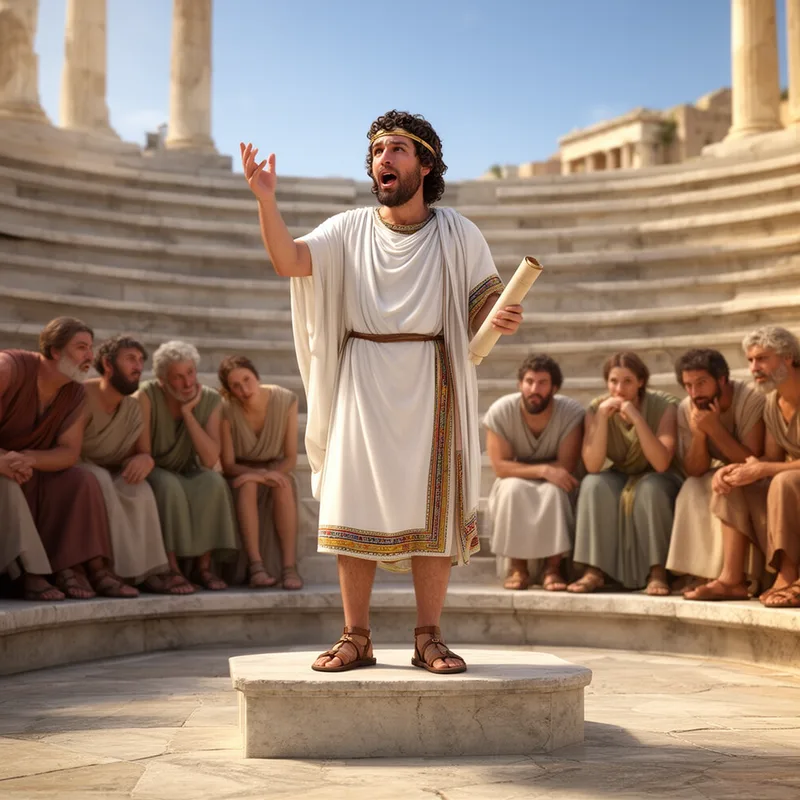
In ancient Greece, a rhapsode would perform epic poetry in the public square, captivating the audience with their voice.
-
The famous rhapsode recited the Iliad, bringing the heroic tales to life for all who gathered to listen.
Synonyms

A person who recites or composes long epic poems like old heroic tales
How Public


Surface Forms
Etymology
Rhapsode comes from Greek parts rhaptein 'to stitch' and ōidē 'song', so a rhapsode was like a 'stitcher of songs' who sewed lines of epic poetry together and recited them to audiences in ancient Greece.