
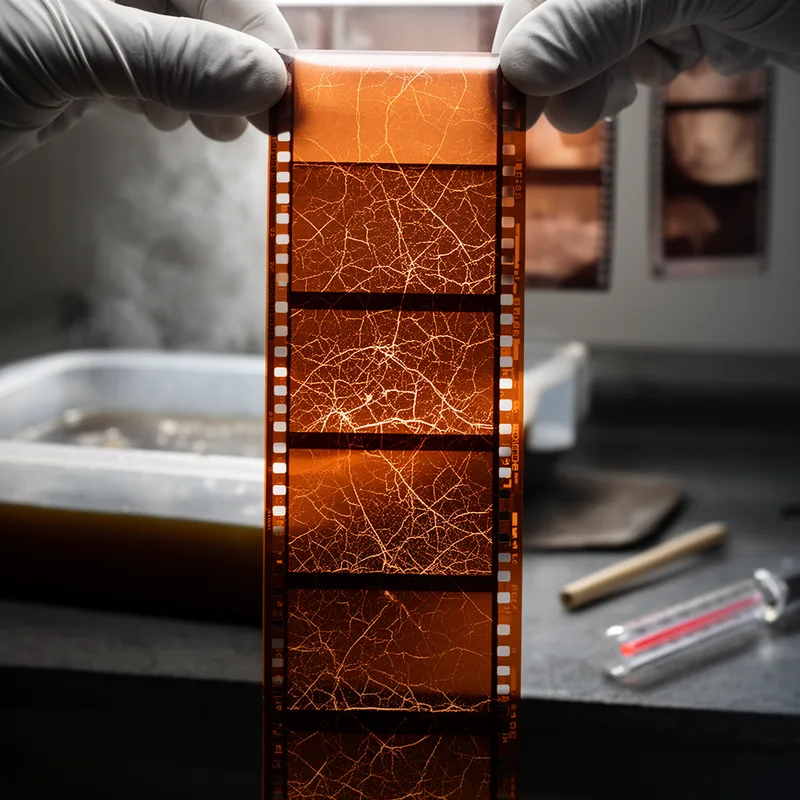
reticulation
- noun
- /ˌrɛtɪˈkjʊleɪʃən/
- Specialized
- Improper temperature changes during film development can cause reticulation in your negatives.
Examples
-
The photographer was disappointed to discover reticulation in his prints after accidentally using hot water in the rinse.
-
Many vintage photographs show visible reticulation due to early chemical processing errors.
-
The reticulation on the film was noticeable after development.
-
Have you seen the reticulations in this photograph?
-
Improper temperature changes during film development can cause reticulation in your negatives.
-
Many vintage photographs show visible reticulation due to early chemical processing errors.
-
The photographer was disappointed to discover reticulation in his prints after accidentally using hot water in the rinse.
Surface Forms
Morphology
reticulation = reticulate (semi-transparent) = reticulate + ion
Morphologically regular (reticulate + -ion) but this photographic sense is specialized technical jargon and may not be inferable to general learners.
Etymology
The word reticulation comes from the Latin reticulum 'little net'. In photography it means the film's surface has made a fine 'net' of cracks or wrinkles, often after sudden temperature changes during development.

