
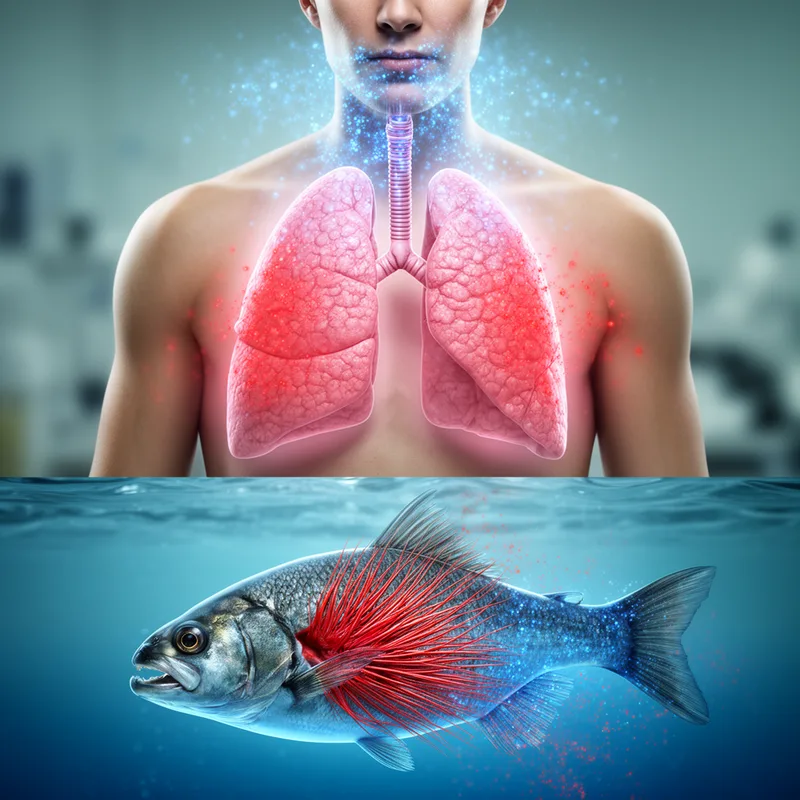
respiratory organ


 1
3.7
1
3.7
- noun
- /ˈrɛspəˌrɛtəri ˈɔrɡən/
Examples
-
Also, the respiratory organs showed more prominent gross lesions in comparison to other organs.
Academic text (2015) -
Generally, more severe histopathological changes were observed in the respiratory organs and kidneys.
Academic text (2015) -
Severity of the signs and lesions was highest in respiratory organs following the intranasal route of infection.
Academic text (2015) -
If you complete the circuit, electricity with a frequency of 60 cycles per second will flow through you, paralyzing your respiratory organs and damaging the central nervous system.
-
The lungs are the primary respiratory organs in humans that facilitate breathing.
-
During asthma attacks, the respiratory organs can become inflamed and restrict airflow.
-
Smoking can severely damage the respiratory organs, leading to various health issues.
How Essential
705
1.0
 1
3.7
1
3.7
- Specialized
14
4.6
- Specialized
4
4.2
72
1.0
Surface Forms
Morphology
The meaning 'an organ responsible for gas exchange during breathing' is directly and transparently derived from combining 'respiratory' (pertaining to respiration) with 'organ' (a body part performing a function). This adjectival + noun composition is a regular, cross-linguistically common pattern, so a B1 learner who knows both constituents will understand the MWE.
Etymology
Respiratory organ is a simple name for a body part that helps you 'breathe': respiratory means 'to breathe' and organ means a body part with a job. So it refers to the parts (like lungs or gills) that take in oxygen and give out carbon dioxide.