

to resect
 6
9.5
6
9.5

- verb
- /rɪˈsɛkt/
- Specialized
- The mass was totally resected, and the patient showed no recurrence at the 18-month follow-up.
- resected tumor
- resected tissue
- resect the mass
Examples
-
Response criteria cannot be applied if visible disease is resected at the time of illness.
Academic text (2015) -
Innovative new techniques to resect tonsillar tissue have been described in the recent literature.
Academic text (2004) -
Well, we tried to resect it.
-
We could resect it.
-
Several other techniques are used to resect a substernal goiter via a cervical approach.
Academic text (2006) -
In 1997, we reported our technique for resecting mediastinal goiters.
Academic text (2006) -
The tumor was resected through the oral cavity with wide margins and dissection.
Academic text (2005) -
The elongated styloid process can be resected surgically via a transoral or extraoral approach.
Academic text (2006) -
Submandibular and minor salivary gland tumors were resected with the goal of achieving adequate margins of resection.
Academic text (2005) -
The surgeon will resect the damaged part of the intestine during the operation.
Synonyms
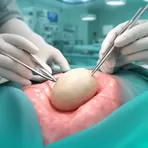
To remove a growth or organ whole from the tissue around it
Antonyms

How Extensive
- Specialized
48
7.2

- Formal
14
7.2
- Specialized
6
9.5
∞
1.5
- Specialized
9
4.9
Surface Forms
Morphology
resect = section (opaque) = re + sect
Although etymologically re- + sect (cut), 'sect' is not a free-standing English verb meaning 'cut', so learners cannot reliably derive the medical sense 'surgically remove' from the parts.
Etymology
The word resect comes from the Latin parts re- meaning 'back' and sect meaning 'to cut', the same sect you see in section. Think of cutting something 'back', like pruning a plant, and that's why to resect is to surgically remove part of an organ.