
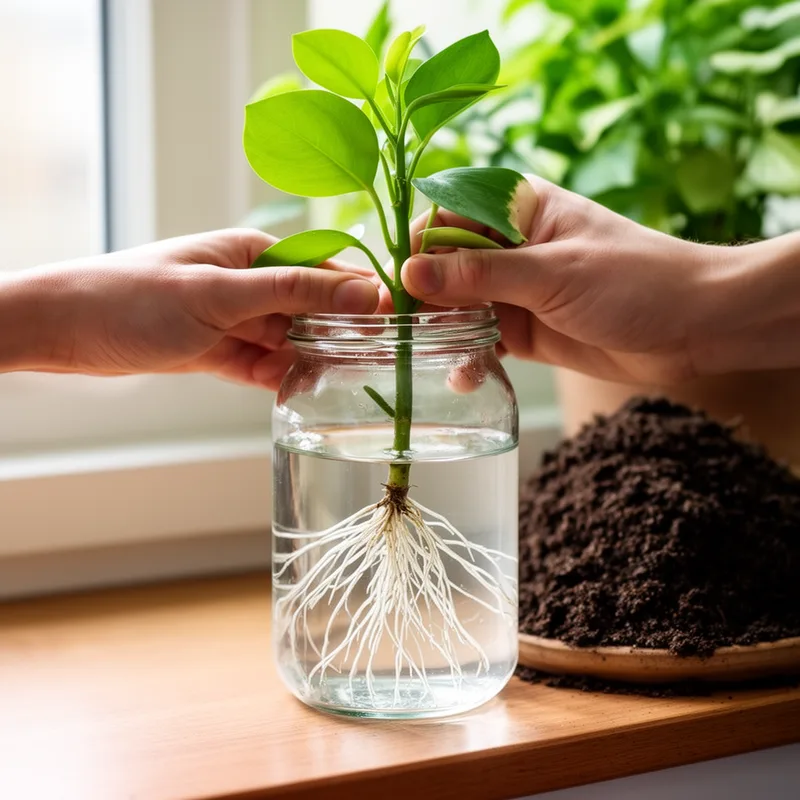
to reroot
- verb
- /ˌriːˈruːt/
- You should reroot the plant in fresh soil.
Examples
-
After the storm damaged the tree, experts tried to reroot it in better soil.
-
You can sometimes reroot a houseplant by placing its stem in water until new roots form.
-
Gardeners often reroot cuttings to propagate new plants.
-
The gardener rerooted the rose bush last spring.
-
To increase their chances of survival, gardeners often reroot cuttings in water before planting them into soil.
-
You can reroot your houseplants by trimming their roots and replanting them in fresh potting soil.
-
The team had to reroot the system to improve its performance and ensure better resource allocation.
Synonyms

 361
1.0
361
1.0

To put seeds or young plants into the soil so they grow
 21
2.6
21
2.6
To put a plant or cutting in soil so it can grow roots
 14
3.3
14
3.3
To put a tree, flower, or seed back into the ground after moving it
Antonyms

How Rooted

Surface Forms
Morphology
Etymology
The word reroot comes from re- 'again' and root 'the part of a plant that holds it in the soil', so to reroot a cutting is to help it 'grow new roots' and become fixed in new soil.