

to represent
 395
3.4
395
3.4

- verb
- /ˌrɛprɪˈzɛnt/
- In the painting, the artist chose to represent the struggle for freedom through bold colors.
- a line represents
- a bar represents
- symbols represent
Loading YouTube…
Watch on YouTubeYou have to know what your brand represents, right?
- You have to know what your brand represents, right?
- Reinforcement learning kind of represents the dream of AI.
- So you have these nodes that represent concepts or words or terms.
- So what we are seeing now represents A fundamental change.
- Let's now go on and see if we can represent scale in the same way.
- And so to them, these investments represent their escape to freedom.
- The blue line represents year over year inflation.
- They don't represent the old right?
- And you said earlier that the United States represents global capitalism.
- So that's, that represents a fundamental problem.
Examples
-
We believe Michael can represent something more than just a basketball player.
-
Let's now go on and see if we can represent scale in the same way.
-
You have to know what your brand represents, right?
-
And so to them, these investments represent their escape to freedom.
-
Obviously it represents a significant investment.
-
The blue flags represent the units that are going to be on duty by dark tonight.
-
Values above .95 are considered to represent a good fit between the model and the data.
Academic text (2015) -
And that one fact alone represents a big shift in mindset.
-
Across academic disciplines, published research in respected journals represents the scientific knowledge base of a field.
Academic text (2013) -
As a whole, the BI triangle represents a strong system of systems.
Synonyms
 ∞
2.3
∞
2.3
To show ideas and feelings by words or actions
 932
1.0
932
1.0
To make a picture of a person or place
 434
3.1
434
3.1
Point to a place, person, direction or thing
 301
3.5
301
3.5
To explain something using pictures or examples
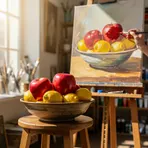 176
3.5
176
3.5
To show something in a picture or in words
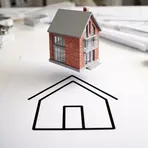 165
3.1
165
3.1
To represent something by a sign or short name
 104
4.2
104
4.2
To show an idea or feeling with an image
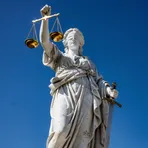 104
5.1
104
5.1
Show an idea, quality or feeling in a clear visible way
 82
3.7
82
3.7
To be a sign of something, often by a word, action or symbol
 69
2.5
69
2.5
To make an image of a person or thing
 50
4.6
50
4.6
To show a place or direction
 30
3.7
30
3.7
To show a person or thing in art like a painting
 27
4.4
27
4.4
To be a sign or symbol of something
 27
6.1
27
6.1
To describe an idea or thing as if it were a human
 14
7.6
14
7.6
To link each item in one set to a single item in another by a rule
 12
5.8
12
5.8
Show the common features of a group or type

To stand for an idea using a picture or sign
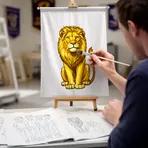
To show an idea using a symbol or picture
How Clearly

Surface Forms
Etymology
Represent comes from the Latin parts re- 'again' and praesentare 'to show', the same root as present. So when something represents an idea or feeling, it 'shows' or 'stands for' that idea.