
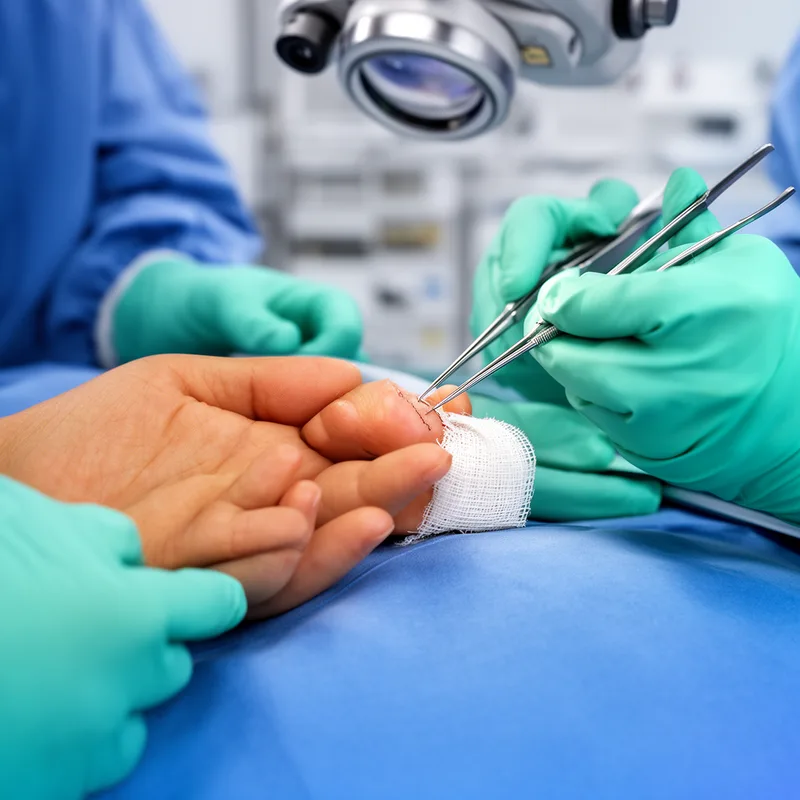
replantation


 1
8.8
1
8.8
- noun
- /ˌriːplænˈteɪʃən/
- Specialized
- In the present study, we report on long-term outcomes of upper extremity replantations using both objective and patient-reported (i.e., DASH, MHQ, and HADS) measures.
- extremity replantation
- upper extremity replantation
- major replantation
Examples
-
The aim of the present study was to assess the long-term outcomes of major upper extremity replantation using both objective and patient-reported outcome measures.
Academic text (2014) -
Additionally, we decided to focus on major replantation instead of digital replantations because the latter are relatively common and have already been well documented.
Academic text (2014) -
Finally, no Canadian study to date has reported on long-term major replantation outcomes.
Academic text (2014) -
Results: Seventeen patients underwent major upper extremity replantation surgery. The majority (16 of 17, 94%) of the included patients were male.
Academic text (2014) -
The doctor performed a replantation to successfully attach the severed finger back onto the patient's hand.
-
After the accident, the surgeon explained that a replantation was necessary to restore the injured limb.
-
They had to schedule a replantation for the thumb that was completely detached during the mishap.
Synonyms
 1
8.4
1
8.4
The act of putting a body part back in its original place after it is removed or lost
 1
4.6
1
4.6
Putting something back where it was after it was removed
Antonyms
How Complex
- Specialized
1
8.8

- Specialized
89
4.2
1
4.6
- Specialized
4
5.6
Surface Forms
Morphology
Etymology
Replantation comes from re- meaning 'again' and plant meaning 'to put or fix in a place', like the simple verb replant. Think of a gardener putting a small plant back in the soil; in medicine replantation means putting a cut-off body part back on and attaching it again.