
renin


 1
9.3
- noun
- /ˈrɛnɪn/
- Specialized
- The effect of renin is to change angiotensinogen into angiotensin I.
- renin-angiotensin
- renin-angiotensin system
- renin-angiotensin system inhibitors
Examples
-
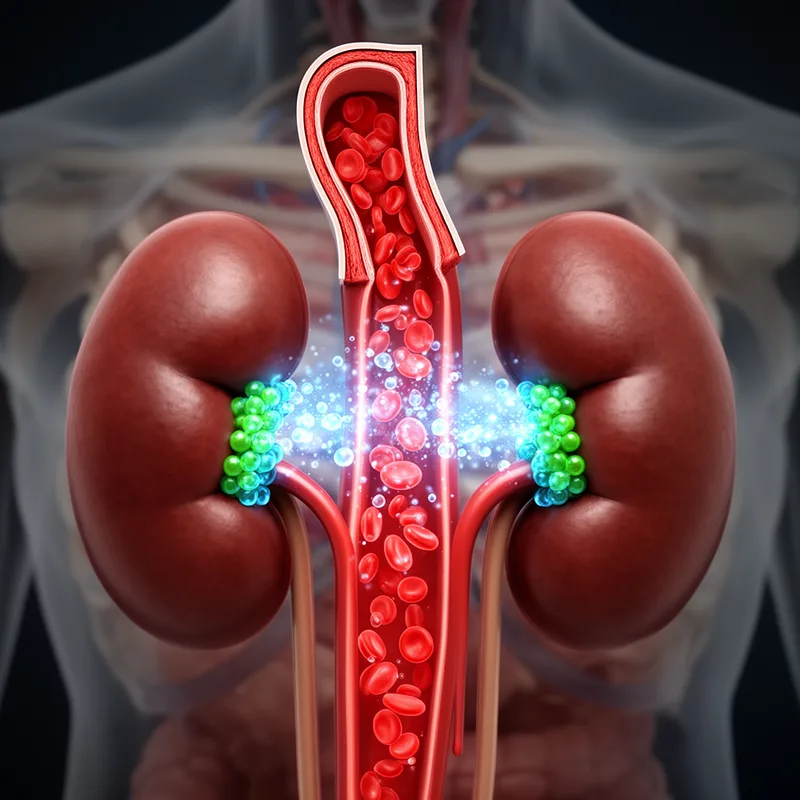
The kidneys are also responsible for the production of three important hormones: erythropoietin, renin, and vitamin D.
Academic text (2012) -
Stimulated plasma renin came back high at 11.9 ng/ml/hr (Normal 1.31-3.95).
Academic text (2007) -
The renin-angiotensin system has been shown to play a central role in the pathogenesis and progression of heart failure.
Academic text (2016) -
In clinical trials, inhibitors of the renin-angiotensin system have been shown to have only modest long-term effects on symptoms.
Academic text (2016) -
The effect of renin is to change angiotensinogen into angiotensin I.
-
What were the results of the renal-vein renin assays?
-
High levels of renin in the blood can indicate issues with blood pressure regulation and kidney health.
Surface Forms
Morphology
renin = ren + in
Formed from a specialized combining form 'ren-' (kidney) plus the chemical/protein suffix '-in', neither of which is a familiar standalone English word for average learners, so the meaning is not derivable from known components.
Etymology
Renin comes from the Latin root ren- meaning 'kidney' and the common protein ending -in, as in insulin. So Renin is a protein made by the kidneys that helps control blood pressure.