
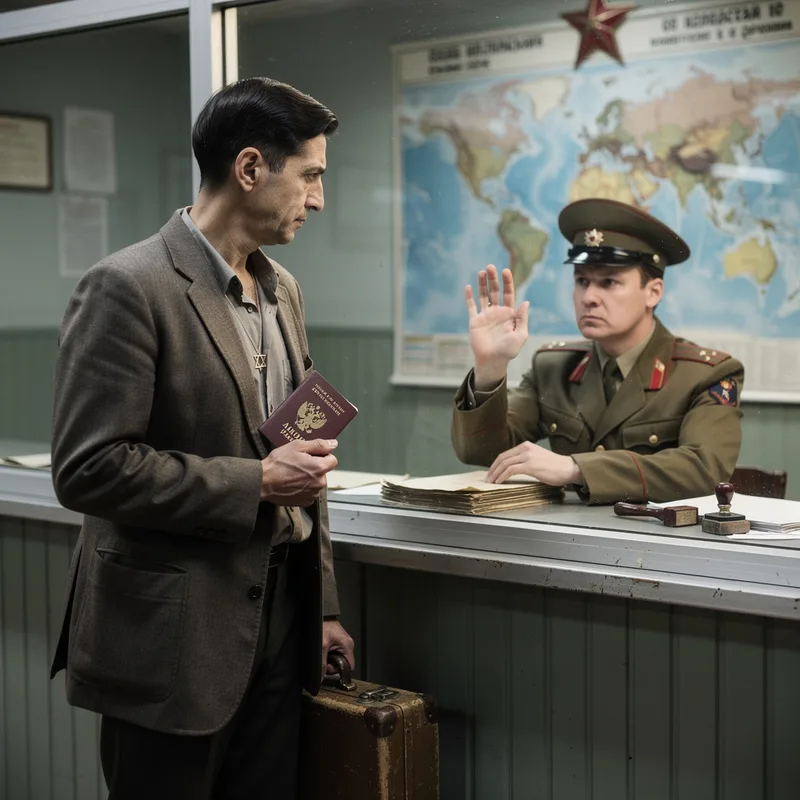
refusenik
 2
9.8

- noun
- /rɪˈfjuznɪk/
- Archaic
- There were scads of these new refuseniks running around Moscow and elsewhere in the Soviet Union.
- Jewish refuseniks
Examples
-
Christopher Wren, a New York Times reporter, likened the refuseniks' struggle to the American civil rights movement.
Academic text (2011) -
Whenever I went to Moscow, I'd meet with refuseniks and try to buck them up.
-
Her visa had run out three weeks before, and she was now officially a refusenik, subject to arrest and deportation.
Fiction book (1991) -
All of the refuseniks possessed belief systems that kept them at the margins of society.
Fiction book (1995) -
Many of the refuseniks were old, though in most cases gerontological advances had kept them looking fit, closer to forty than seventy.
Fiction book (1995) -
The first serious Russian-Jewish politician was Natan Sharansky, the legendary refusenik and Soviet dissident.
Academic text (2011) -
In the Soviet Union, arefusenik often faced harsh penalties for wanting to leave the country.
-
Many refuseniks were activists who campaigned for their right to emigrate due to political oppression.
-
During the Cold War, being labeled arefusenik meant living under constant surveillance by the authorities.
Surface Forms
Morphology
Etymology
The word refusenik comes from the English verb refuse ('to say no') and the Russian ending -nik ('person'). It was first used for people in the Soviet Union who were denied permission to emigrate, so a refusenik is someone who was 'refused' the right to leave.