
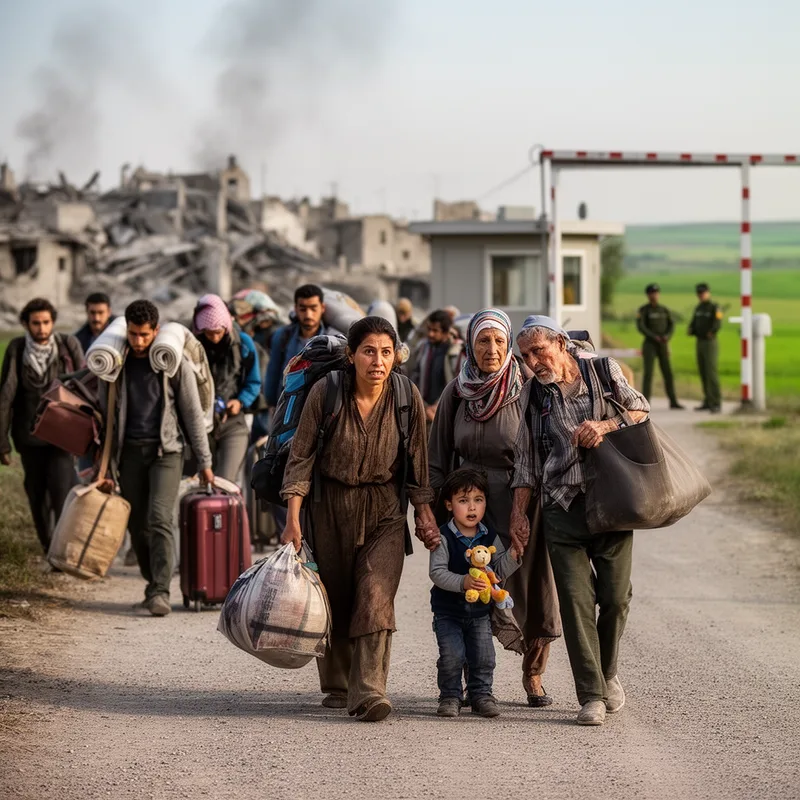
refugeeism
- noun
- /ˌrɛfjuˈdʒiˌɪzəm/
- Specialized
- Many families are forced to leave their homes due to refugeeism caused by conflict and persecution.
Examples
-
The causes and consequences of refugeeism are usually politically contentious.
Academic text (2002) -
Such mobility has been termed environmental refugeeism.
Academic text (2002) -
At that point, population factors (which had been variables in the earlier years) were further complicated by "refugeeism" (a new variable in this context).
Academic text (2002) -
Refugeeism as forced migration
Academic text (2002) -
The core issue is a phenomenon we can call "refugeeism." For 60 years, UNRWA has been paying four generations of Palestinians to remain refugees, reproduce refugees, and live in refugee camps.
Academic text (2010) -
The absence of volition in migration (creating refugeeism) could also be generated by an erosion of life-supporting properties in the home community, with or without the presumption of force and violence.
Academic text (2002) -
Similarly, the perennial refugeeism of the UNRWA welfare-warfare state always results in paramilitary formations, perpetual warfare, and terrorism.
Academic text (2010) -
Both citizens and permanent residents are integrated into the labor market and commerce and are isolated from other Jordanians primarily by the stigma of refugeeism—encaged, to rephrase President Carter.
Academic text (2010) -
The global community must address the issue of refugeeism, which affects millions each year.
-
The study examined the social implications of refugeeism on host countries and local populations.
Antonyms


Surface Forms
Morphology
Etymology
Refugeeism comes from refugee, which itself comes from old parts re- 'back' and fug- 'to flee', and is related to refuge meaning 'a safe place'. So, the ending -ism means 'a state or movement', and refugeeism is the condition, movement, and experience of people who have to leave their homes because of danger.