
reflection
 1
6.3
1
6.3

- noun
- /rɪˈflɛkʃən/
- Specialized
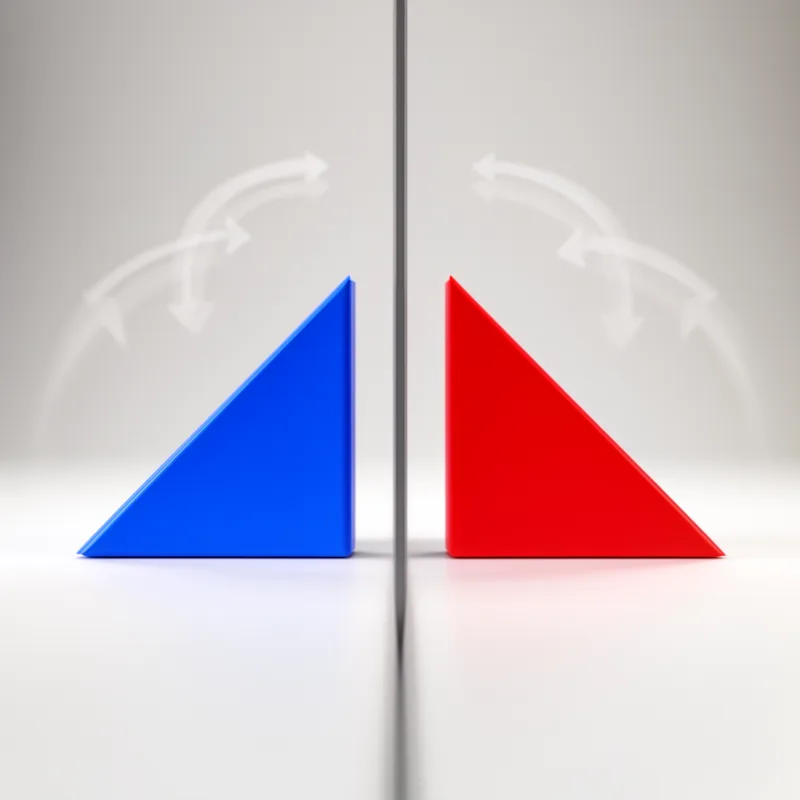
- In geometry class, we learned that a reflection flips a shape across a line to create its mirror image.
Loading YouTube…
Watch on YouTubeThat's called particle antiparticle symmetry or reflection charge, reflection symmetry.
- That's called particle antiparticle symmetry or reflection charge, reflection symmetry.
Examples
-
And this was the operation of reflection, a mirror point M.
-
Let me just label them X axis, reflection Y axis.
-
So that was a reflection about the Y axis.
-
Graham states that "surely the second should be a simple reflection of the first."
Blog text (1) -
It's not hard to do if you take advantage of symmetries like rotations and reflections.
Fiction book (2001) -
In the illustrations at right, the zeroth order (000) reflection corresponds to a constant added to the density, and the phases for the (200) and (300) reflections have been set equal to 0.
Academic text (2006) -
Dixon (1995) observed eighth-grade students in a bilingual classroom exploring the geometric concepts of reflection and rotation and also concluded that using computer-based dynamic instruction had a positive effect.
Academic text (2000) -
A reflection across the X-axis changes the orientation of the figure while keeping its shape identical.
-
After applying the reflection transformation, the triangle appeared to be mirrored perfectly on the graph.
Synonyms
 14
3.3
14
3.3
An image that shows left and right switched as in a mirror


 1
7.9
1
7.9
A property of a system where left and right are swapped and it stays the same
Compounds

- Specialized
1
5.1
The angle between a reflected light ray and a line at right angles to the surface where it hits

- Specialized
Physical laws do not change when left and right are swapped
Surface Forms
Morphology
Etymology
Reflection comes from Latin parts re- 'back' and flect 'bend', and in math it means flipping a shape across a line so it becomes a mirror image. That's why a mathematical reflection changes orientation like looking in a mirror.