
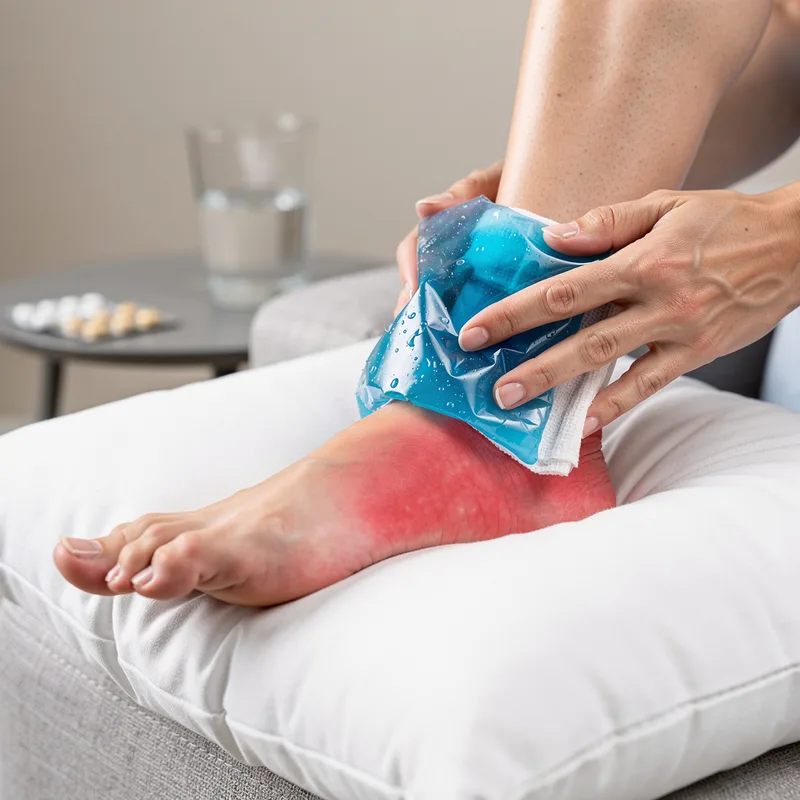
to reduce swelling
 1
3.4
1
3.4

- phrasal verb
- It's important to wash your mouth with water and to use a cold compress in order to reduce swelling and ease the pain.
- help reduce swelling
- reduce swelling and pain
- reduce swelling and inflammation
Examples
-
Applying a cold compress can help reduce swelling in your ankle after a sprain.
-
Doctors often recommend rest and ice to reduce swelling after any surgery.
-
Published studies indicate that both of these natural ingredients can significantly reduce swelling and bruising to the face.
Blog text (20) -
During a two-hour surgery on Saturday, doctors removed bone fragments from her brain in order to help reduce swelling.
Blog text (6) -
You need a cold compress... so that blood vessels are tightened which will help reduce swelling.
-
It reduces swelling and inflammation.
-
Increased circulation is believed to reduce swelling and inflammation, making magnets most attractive for individuals with conditions such as arthritis, carpal tunnel syndrome, sports injuries, and other chronic pain conditions.
Academic text (2003) -
To reduce swelling, elevate the injured leg and apply an ice pack for 20 minutes.
Synonyms
 76
5.3
76
5.3
To make pain, suffering, or a problem less strong
Surface Forms
Morphology
The meaning is directly compositional: 'reduce' (make smaller) applied to 'swelling' (a raised/inflamed area) yields 'make the swelling smaller', which a B1 learner who knows both words can readily infer. This is a common medical collocation and follows predictable cross-linguistic patterns, so the expression is transparent.
Etymology
The phrase reduce swelling comes from the simple image of using cold, pressure, or medicine to make a raised, puffy area, the swelling, get smaller, so reduce means 'make smaller' and the whole phrase means 'make swelling smaller'.