
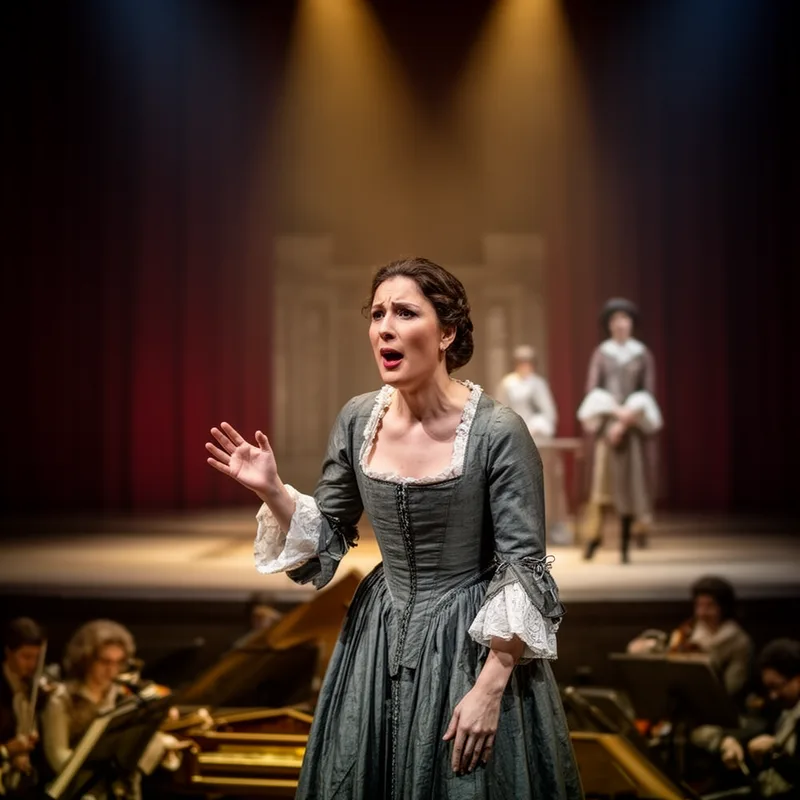
recitative
 1
9.9
1
9.9

- noun
- /ˌrɛsɪtəˈtiv/
- Specialized
- The form of many such narrative songs is prosimetric: that is, passages of verse with melody alternate with passages of recitative, with verse employed for passages of dialogue in particular.
- a long recitative
Examples
-
The language Kellgren uses to bring all this about shows a great deal of variety, especially in the recitatives.
Academic text (2000) -
Why do our composers rant constantly about the length of the recitatives?
Academic text (2000) -
Indeed, this recitative really becomes here an arioso.
Academic text (2000) -
Bravely then Jeannette began to speak, as in a recitative.
Fiction book (1995) -
The recitative melody that characterized Lara's music tended to give importance to the literary text.
Academic text (1996) -
However, most of the recitatives are accompanied, sometimes quite extensively, and become, in effect, ariosos.
Academic text (2000) -
On the whole, it is in the recitatives of Aeneas that Kellgren's best poetry is to be found, as he must have known.
Academic text (2000) -
There is, occasionally, too, the sense that Kellgren was experimenting with the recitatives as he went along, for they tend to be more varied in their forms later in the text.
Academic text (2000) -
Moreover, the unmistakable Larian style was already present in the melody, which was sung in a recitative style in order to give primacy to the literary text.
Academic text (1996) -
In the opera, the singer delivered the story in a beautiful recitative that captivated the audience.
How Melodic

Surface Forms
Morphology
Etymology
Recitative comes from the Italian and Latin word recitare, which means 'to recite' or 'to say aloud' and is the same root as the English word recite. So, a recitative is singing that sounds like speech and is used to tell the story in an opera.