
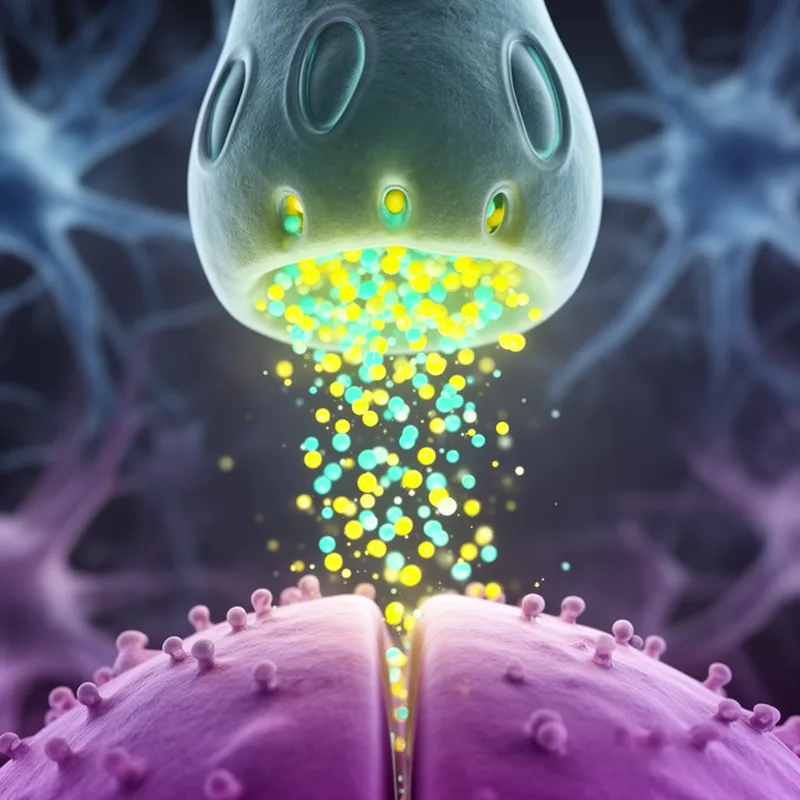
re-uptake
- noun
- /ˌriːˈʌpteɪk/
- UK
- Many antidepressants work by inhibiting the re-uptake of serotonin in the brain.
Examples
-
Many antidepressants work by inhibiting the re-uptake of neurotransmitters.
-
The efficiency of dopamine re-uptake affects overall neural activity.
-
Scientists are investigating how re-uptake mechanisms influence mood disorders.
-
The re-uptake of serotonin is crucial for mood regulation.
-
Many antidepressants work by inhibiting the re-uptake of serotonin in the brain.
-
Scientists are investigating how re-uptake mechanisms influence mood disorders.
-
The efficiency of dopamine re-uptake affects overall neural activity.
Synonyms
 2
7.2
2
7.2

A nerve cell takes back a brain chemical it released


 1
6.7
1
6.7
A process where the body takes water or nutrients back in
Antonyms

Surface Forms
Morphology
Etymology
The word re-uptake has two parts: re- meaning 'again' and uptake meaning 'taking up', like the simple word take. So re-uptake is literally 'taking up again', which fits the process where a cell absorbs a substance back and lowers its activity.