
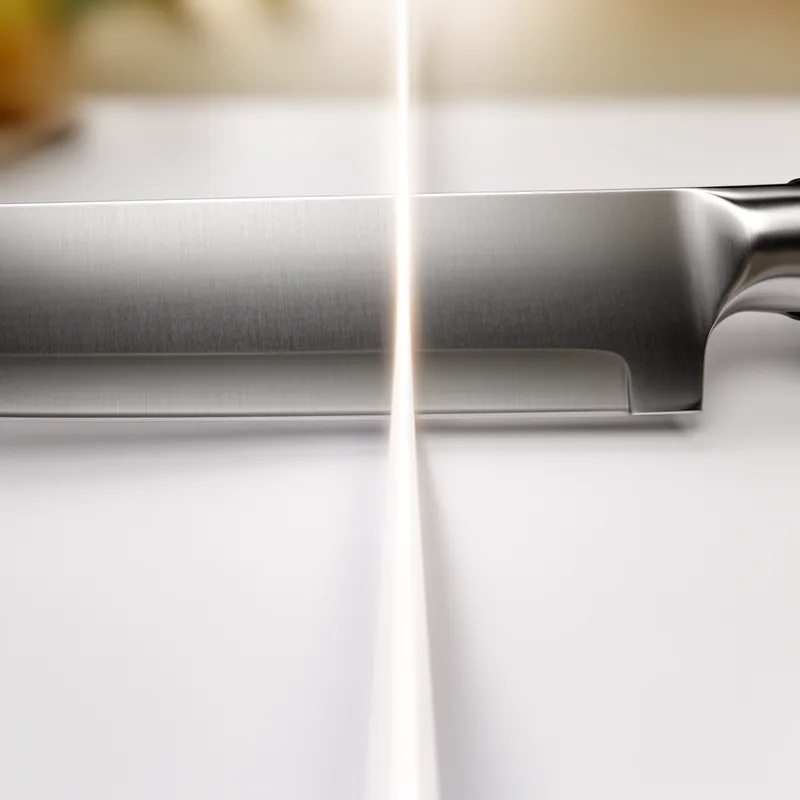
razor edge


 1
4.7
1
4.7
- noun
- /ˈreɪzər ɛdʒ/
- Without hesitation, Mr. Bullwinkle took a desperate gamble and, by superb seamanship, ran his Salamander razor-edge close across the steamer's plunging bow.
Examples
-
He carefully shaped the wood until it had a razor edge that could slice through paper.
-
It has a razor edge that will sever your neck.
Fiction book (1994) -
Let your old buddy Ernest show you how to put a razor edge on that dog.
-
What if she is forever wary of the razor edge?
Blog text (29) -
Honed to a sharp razor-edge.
-
He shut the door, and I sat down at the table, feeling the razor edge of the blade with my fingers.
Fiction book (2001) -
With his feet carefully set at the razor edge of the diving board, his face fills with intense concentration.
Blog text (24) -
When he shifted position, the knife's razor edge nicked her skin.
Fiction book (1999) -
Now Jago Antia looked up at the razor edge of the ridge far above, and he could see, if he turned his head to one side, a line of tiny figures walking down it.
Fiction book (1994) -
He slipped a knife from his belt and ran its razor edge along the veins of Casimir's neck.
Fiction book (1992)
Synonyms
 8
3.6
8
3.6
The sharp side of a blade that slices food or other things
 1
6.0
1
6.0
The pointed, dangerous part of a thing or the most risky part of a situation

The sharp side of a knife that cuts things
How Sharp
1
4.7
 ∞
1.0
∞
1.0
Surface Forms
Morphology
The meaning 'an extremely sharp edge' is directly derivable from combining 'razor' (a shaving blade) with 'edge' (the boundary of a surface); a learner who knows both words can infer it refers to an edge as sharp as a razor. This simple noun–noun compositional pattern is common cross-linguistically and contains no idiomatic or metaphorical shift, so it is transparent to B1 learners.
Etymology
Razor edge comes from the very sharp edge of a razor, a small blade that can cut skin easily. That's why the phrase means 'extremely sharp' or 'very exact'.