
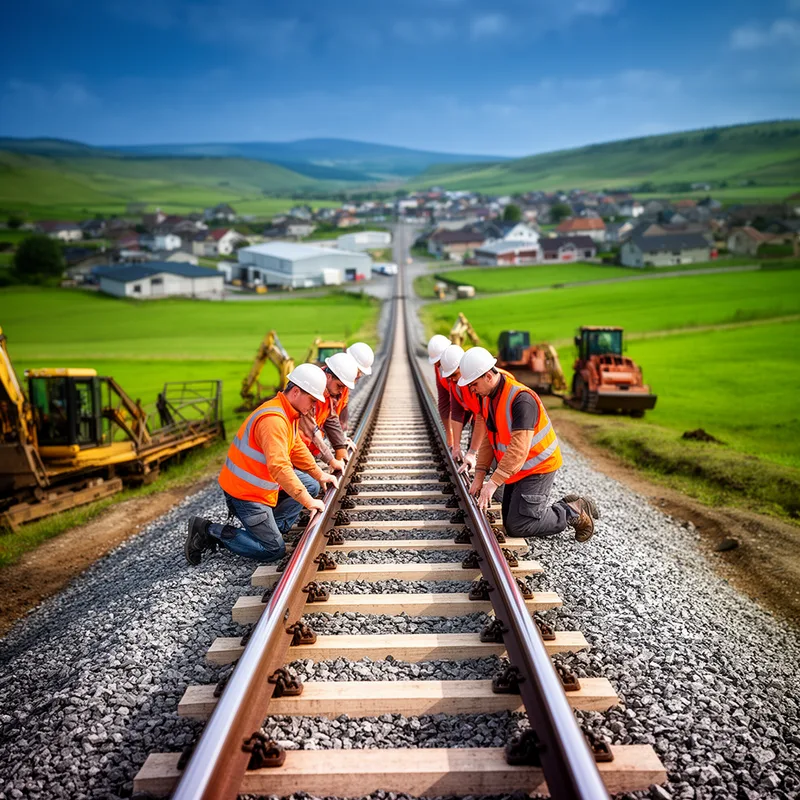
to railroad
- verb
- /ˈreɪlˌrɔrd/
- Archaic
- The company plans to railroad new tracks through the mountains.
Examples
-
The government invested heavily to railroad the western region during the nineteenth century.
-
Many small towns grew rapidly after engineers railroaded the valley.
-
They plan to railroad the new territory within the next decade.
-
They railroaded the construction of the new line last year.
-
The company plans to railroad new tracks to improve transportation in the region.
-
They decided to railroad the construction of the line to enhance economic growth.
-
To expand the railway network, they will railroad additional routes across the countryside.
Compounds



 8
4.1
8
4.1
Secret network that helped enslaved people escape to free states and Canada


- Specialized
2
4.1
A heavy wooden or concrete beam laid across railway tracks to hold rails in place

 1
1.8
1
1.8
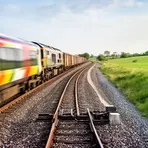
A long line of connected cars that runs on tracks and carries people or goods


 1
8.1
1
8.1
An apartment with all rooms in a row connected by doors, often with no hallway
- Specialized
1
4.6
A short extra track beside the main track where trains stop to let other trains pass

 1
3.4
1
3.4
A station at the end of a train line where trains load or unload people and goods




A low plant with long spreading stems and bright purple flowers that grows on coastal sand dunes


Surface Forms
Etymology
Railroad as a verb comes from the idea of building a railroad; to railroad a region is to put tracks there. So to railroad an area means to supply it with railroad lines.