
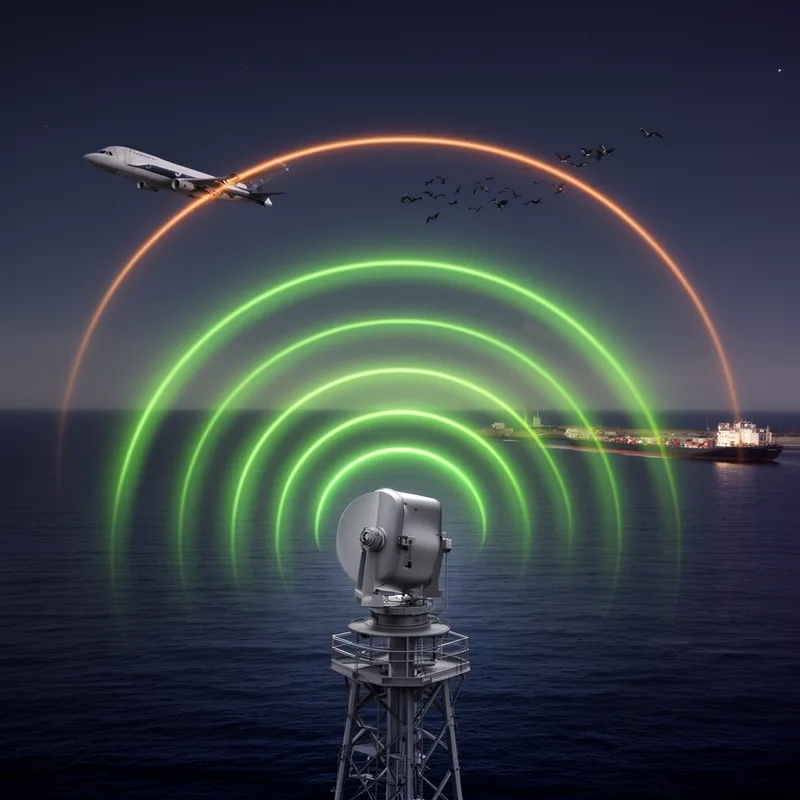
radiolocation


 1
8.4
1
8.4
- noun
- /ˌreɪdioʊlɪˈkeɪʃən/
- Specialized
- Modern airports rely on radiolocation systems to safely guide aircraft during takeoff and landing.
Examples
-
Many ships use radiolocation for navigation.
-
During the experiment, scientists used radiolocation to map the positions of migrating birds at night.
-
New advances in radiolocation have improved the accuracy of maritime navigation.
-
The radiolocation system helped locate the missing aircraft.
-
The new fishing boats are equipped with advanced radiolocation technology to track schools of fish beneath the surface.
-
By utilizing radiolocation, scientists can monitor animal movements across vast distances without disturbing their natural behavior.
-
The military employs radiolocation to locate enemy radar systems and ensure strategic advantages during operations.
Synonyms
 367
4.1
367
4.1
A machine that uses radio waves to find objects and show their distance and speed

A system that sends short bursts of microwaves to find how far away objects are

A system that finds distant objects like planes or ships by sending radio pulses and hearing echoes
How Precise

Surface Forms
Morphology
radiolocation = radiolocate (transparent) = radio + locate + ion
Built by adding the noun-forming suffix '-ion' to 'radiolocate', yielding the action/process meaning.
Etymology
The word radiolocation comes from radio, which comes from an old Latin word radius meaning 'ray' or 'beam', and location, from locus meaning 'place'. So radiolocation is literally 'finding the place' of something with radio 'waves', which explains its modern use to detect where distant objects are.