
radicular


 1
9.9
- adjective
- /ræˈdɪkjʊlər/
- Specialized
- The patient was diagnosed with radicular pain that radiated from his lower back down to his leg.
- radicular pain
Examples
-
In cases of nerve injury, radicular discomfort may indicate that the root of the nerve is affected.
-
Neurological symptoms including radicular pain, any limb weakness, difficulty in walking, sensory loss, or bladder or bowel dysfunction.
Academic text (2014) -
This includes those with failed back surgery (3 months post-discectomy and decompressions, and 6 months post-fusion), those with radicular symptoms, and those with medical-legal involvement (22).
Academic text (1997) -
While no randomized trials for radicular pain (dermatomal distribution of limb pain consistent with a nerve root) currently exist, favorable observational data have been reported by Cassidy et al. (15).
Academic text (1997) -
Radicular symptoms often occur when a nerve root is compressed, leading to sharp pain and tingling.
Surface Forms
Morphology
radicular = radicle (opaque) = radicul + ar
Although formed by a Latin combining form meaning 'root' plus an adjectival suffix, the form is technical and not transparently related to the everyday word 'root' for most learners.
Etymology
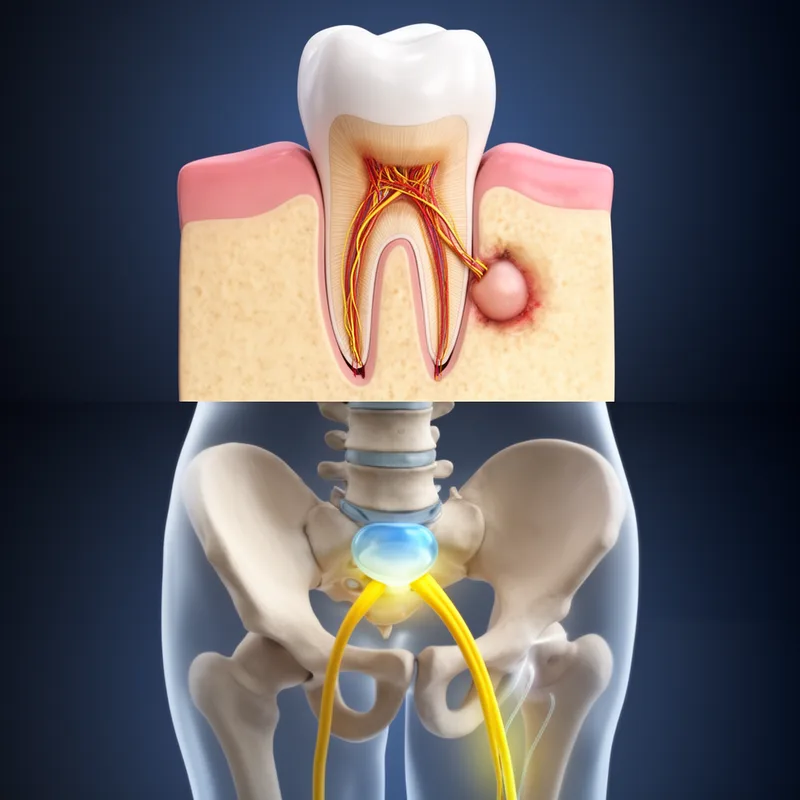
Radicular comes from the Latin word radix, which means 'root', and you can see the same root in words like radish and radical. So radicular means 'of the root', which is why doctors use it for problems at the root of a tooth or a nerve.