
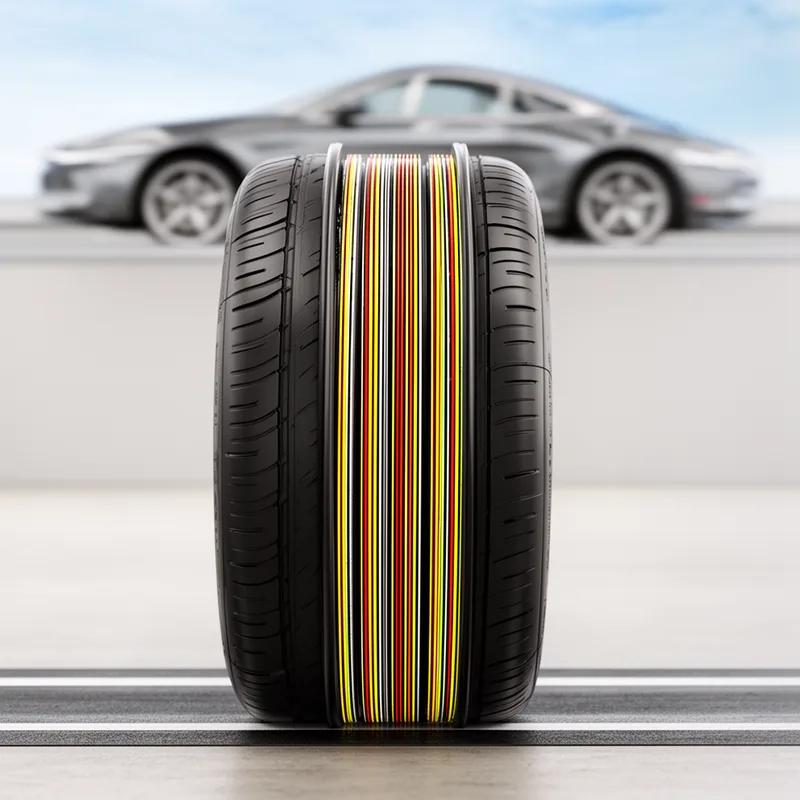
radial-ply tire
- noun
- /ˈreɪdiəl plaɪ taɪər/
- Specialized
- Many modern vehicles are equipped with radial-ply tires for improved comfort and traction.
Examples
-
The advantages of radial-ply tires include longer tread life and better fuel efficiency.
-
He replaced the old bias-ply tires with new radial-ply tires for a smoother ride.
-
The new radial-ply tire improved the car's handling.
-
Many drivers prefer radial-ply tires for better performance.
-
Many modern vehicles are equipped with radial-ply tires for improved comfort and traction.
-
He replaced the old bias-ply tires with new radial-ply tires for a smoother ride.
-
The advantages of radial-ply tires include longer tread life and better fuel efficiency.
Synonyms
 7
7.2
7
7.2

A car tire with layers that run across the tire


 1
4.1
1
4.1
A car tire with strong cords that run across it to give a smoother ride
Surface Forms
Morphology
radial-ply + tire
The compound is compositionally formed from 'radial' (relating to radius/direction) + 'ply' (a layer) + 'tire', so a learner who knows those constituent meanings can infer it refers to a tire with layers arranged in a radial orientation. However, the term is technical and the precise mechanical sense (cords at 90° to the direction of travel and its performance implications) and the specialist sense of 'ply' may not be fully predictable to an average B1 learner, making it only partially transparent.
Etymology
The term radial-ply tire comes from how the strong inner layers run: radial means lines that go out from the wheel center like spokes, and ply means a layer. Because the layers run this way across the tire, it bends more where it meets the road, so it gives a 'smoother ride' and helps a car 'use less fuel'.