
racemic
 1
9.2

- adjective
- /rəˈsiːmɪk/
- Specialized
- Chemists often study racemic compounds to understand the properties of their individual enantiomers.
- racemic mixture
Examples
-
The research showed that the racemic form of the drug was more effective than its single enantiomer.
-
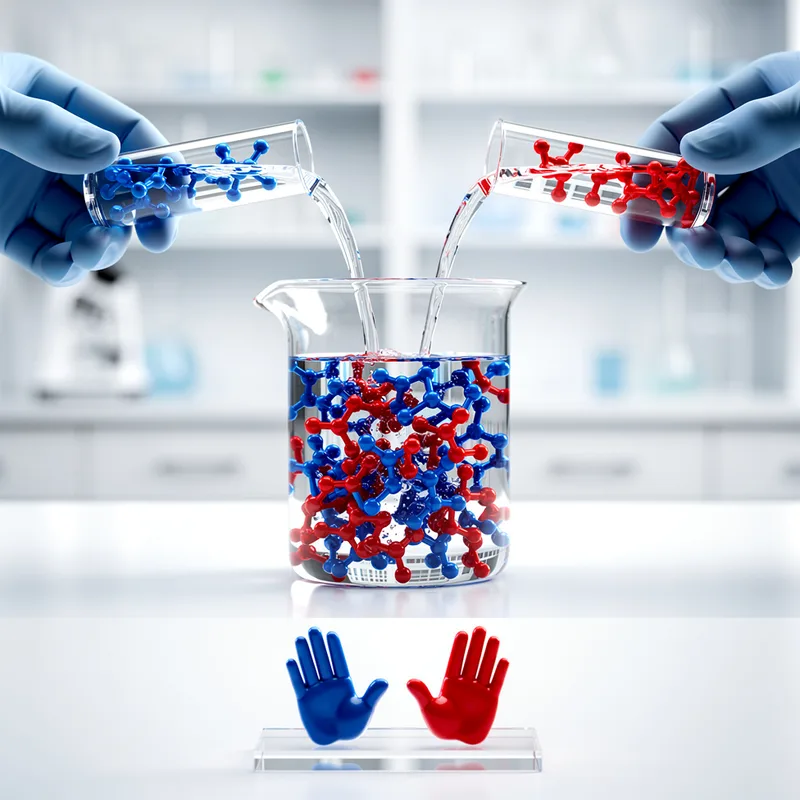
Many pharmaceuticals are sold as racemic mixtures, containing equal amounts of both enantiomers.
-
Ibuprofen is racemic and these things are proven safe.
-
If the proline is not racemic (racemic = 50:50 mixture of mirror images), then the product will have more of one mirror image than the other.
Blog text (14) -
I think you could think of this as being caused by the racemic material being much less soluble than one enantiomer, especially for serine (99%) but high or significant for six others.
Blog text (14) -
In studying amino acids in water, she found that if the amino acid (AA) was not racemic and the concentration was high enough that not all of the AA was dissolved (some present as solid), then what was dissolved could have quite a bit more of one enantiomer than the solid did.
Blog text (14)
Compounds

- Specialized

 1
7.9
A form of tartaric acid that does not rotate light and is common in grape juice
How Same-Handed
- Specialized
1
9.9

- Specialized
1
9.2
Surface Forms
Morphology
racemic = racemate (opaque) = racem + ic
The derivation from 'racemate' to 'racemic' by adding the adjectival suffix '-ic' is a regular morphological change in technical vocabulary.
Etymology
The word racemic comes from the Latin racemus, meaning 'a bunch of grapes', because chemists first found this kind of mixture in acid from grapes. That's why racemic now means a mixture with equal amounts of left- and right-handed mirror-image molecules.