
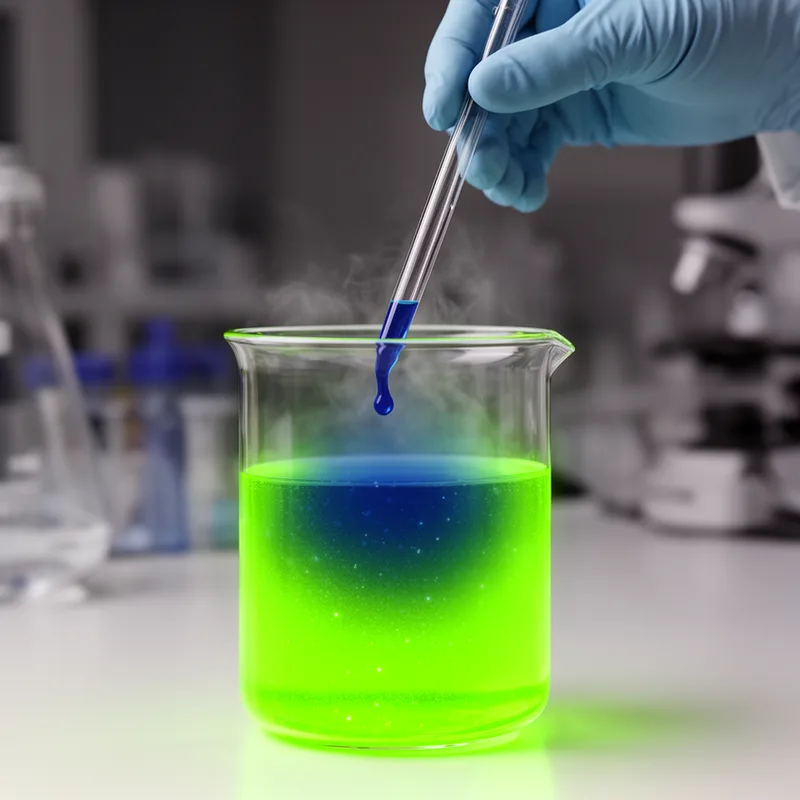
quencher
7.9
A substance added to stop a chemical reaction or reduce unwanted glow
- noun
- /ˈkwɛnʧər/
- Specialized
:
inhibidor
- In chemical experiments, a fluorine absorber acts as a quencher by preventing unwanted reactions.
Examples
-
So you have and you know, it could be oxygen which acts as a quencher, or it could be another fluorophore.
-
Sodium sulfite is often used as a quencher to inhibit the fluorescence in various laboratory processes.
-
This compound serves as a quencher, effectively stopping the reaction and increasing stability.
Synonyms

 46
6.0
46
6.0

A substance that slows down and can stop chemical reactions in the body or in a lab
stops processes by preventing fluorescence or a reaction

reducer
vsquencher
1
5.0
A thing that lowers the level or strength of something
stops or prevents processes rather than merely lowering amounts

deactivator
vsquencher
1
5.8
A thing, person, or substance that stops a machine working
reduces or stops chemical or physical processes, preventing fluorescence
How Effective
extinguisher
46
3.4
46
3.4

quencher
- Specialized
suppressor
1
7.2
- Specialized
1
7.2
inhibitor
46
6.0
- Specialized
46
6.0
Surface Forms
Morphology
Etymology
Quencher comes from the verb quench, which means 'to put out' or 'stop'. In science a quencher is a substance that 'stops' a reaction or keeps a light or glow from appearing, so the word tells you it quiets the process.