
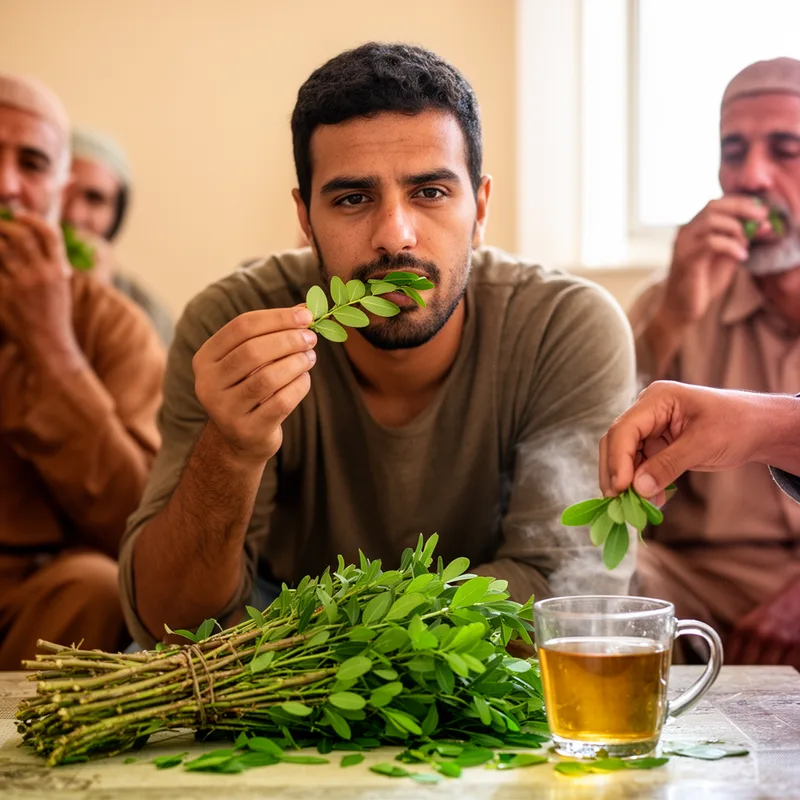
qat


 1
9.9
1
9.9
- noun
- In Yemen, it is common for families to grow qat plants in their gardens for personal use.
- chew qat
- qat leaves
Examples
-
Many people gather in the evenings to chew qat and socialize with friends.
-
Chew on this: new research on Qat. The Home Office's drugs and alcohol research unit will report in the autumn.
Blog text (11) -
The Need for Research (Or, Why You Should Not Write Newspaper Columns While High on Qat)
Blog text (25) -
Speaking of the Middle East, this reminds me of the article you posted regarding Yemen and how most of the country's water is used for Qat production.
Blog text (18) -
If they conclude that qat is dangerous, they may well recommend that it should be classified along with other illegal drugs such as cocaine, cannabis, and amphetamines, bringing UK law into line with the majority of Western countries.
Blog text (11) -
Yemen is predicted by many to be the first modern nation to literally run out of water, in part due to the cultivation of qat, a mild narcotic, but also because of high population growth.
Blog text (13) -
It is interesting that in Ethiopia, the Orthodox Church prohibited Christians from smoking tobacco and chewing qat (Wolde-Aregay 1988:20).
Academic text (1994) -
Chewing qat is a traditional practice that often accompanies important social events in East Africa.
Synonyms
 6
9.9
6
9.9
Leaves from a shrub that people chew to feel more awake or make into tea
 3
9.9
3
9.9
Leaves chewed or brewed into tea to make people feel awake and happy
 1
9.9
1
9.9
Leaves chewed or brewed as tea to make people feel more awake
Leaves of a shrub chewed or brewed into tea to make you feel awake and happy
A drink or chew made from plant leaves that makes you feel more awake

Leaves of a plant that people chew or brew as tea to feel more awake and a little happy

A plant whose leaves people chew or make into tea to feel more awake
Surface Forms
Etymology
Qat comes from the Arabic word qāt (also written khat) and from names used in East Africa for the same plant, where people have chewed the leaves for a long time. English simply borrowed the local name, so qat today means the leaves people chew or brew into tea that 'give energy'.