
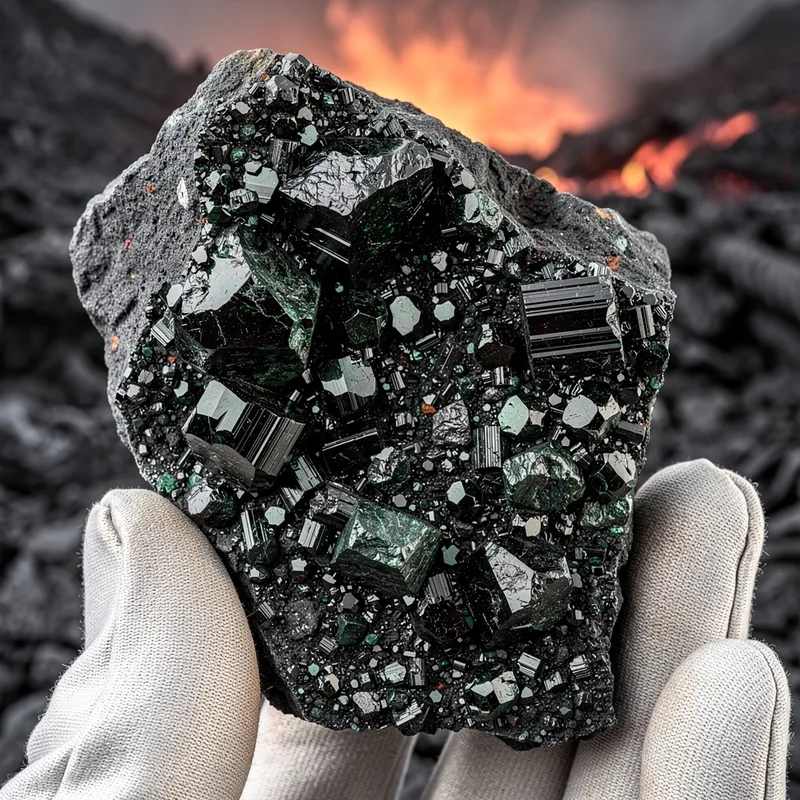
pyroxene
 1
9.9

- noun
- /ˈpaɪrəkˌsiːn/
- Specialized
- pyroxene and olivine
- pyroxene minerals
- rich pyroxene
Examples
-
You can keep pyroxenes, magnetites and plutonics as far as I'm concerned.
-
A cluster of pyroxene phenocrysts in a basic sill, Isle of Mull, Scotland.
Academic text (2018) -
This atom evaporates from the meteoroid's core olivine and pyroxene minerals and produces a bright green emission line at 517 nanometers.
Academic text (2001) -
The mineralogist identified the pyroxene in the rock sample during her research.
-
Rock formations commonly contain pyroxene, which is crucial for understanding their composition.
-
Geologists study pyroxene to assess the history of volcanic activity in the region.
Surface Forms
Etymology
Pyroxene comes from Greek parts pyr 'fire' and xenos 'stranger'. People called these minerals 'fire strangers' because they were first found in hot lava and other rocks made by heat, so the name helps you remember that pyroxene is a mineral often found in volcanic and heat-changed rocks.