
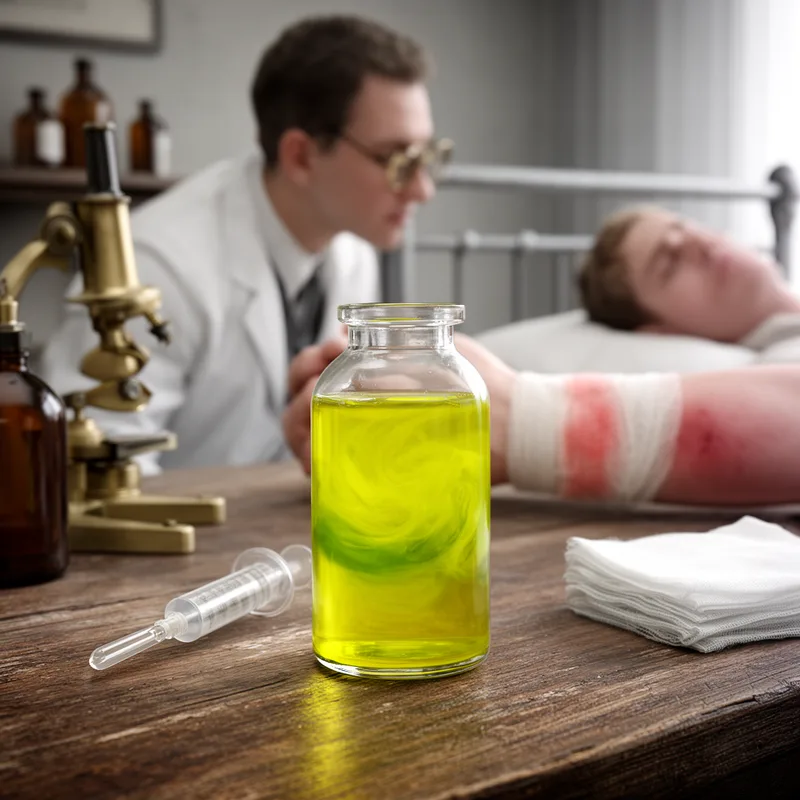
pyocyanase
- noun
- /ˌpaɪoʊˈsaɪəneɪs/
- Archaic
- Early 20th-century doctors experimented with pyocyanase as a treatment for bacterial infections.
Examples
-
The laboratory grew a strain of bacteria that naturally produced pyocyanase.
-
Pyocyanase has largely been replaced by modern antibiotics in clinical practice.
-
The pyocyanase treatment was effective.
-
Dr. Smith recommended pyocyanase for the infection.
-
Pyocyanase was once a popular antibiotic for treating serious bacterial infections.
-
In the past, pyocyanase was used to combat infections caused by Pseudomonas bacteria.
-
Pyocyanase is derived from the bacterium Pseudomonas aeruginosa and was utilized in early antibiotic treatments.
Surface Forms
Morphology
Etymology
Pyocyanase comes from three parts: pyo- 'pus', cyano- 'blue', and -ase which marks a substance. Because the bacterium Pseudomonas makes a blue-green pigment, the antibiotic mixture made from it was called pyocyanase, so the name links the drug to its colour and source.

