
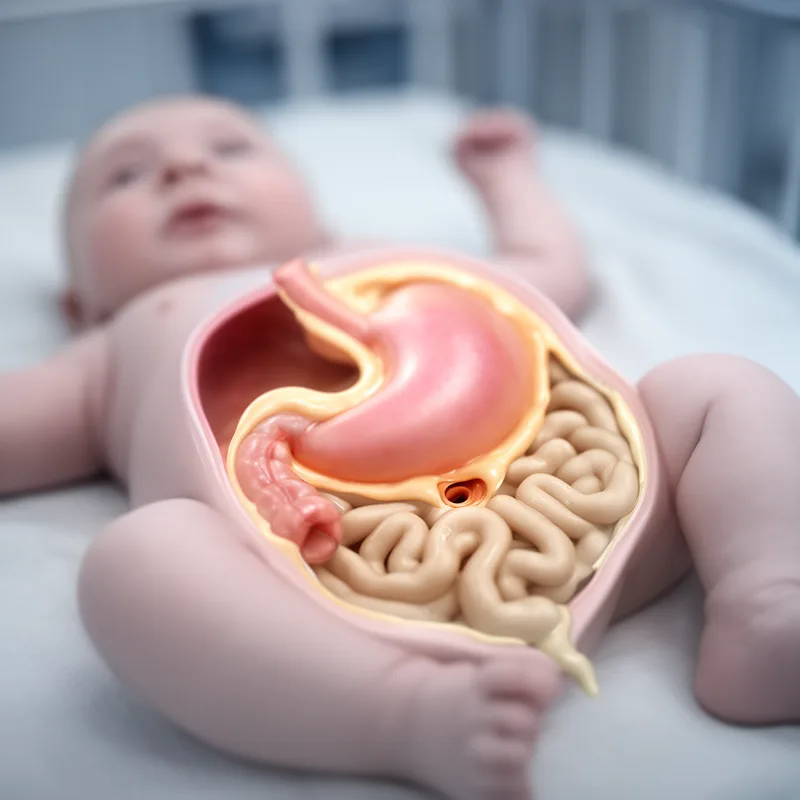
pyloric stenosis
- noun
- /paɪˈlɔrɪk stəˈnoʊsɪs/
- Specialized
- Many infants require surgery to correct pyloric stenosis if it causes significant feeding issues.
Examples
-
The doctor diagnosed the baby with pyloric stenosis after noticing the symptoms.
-
Sarah had surgery at birth for pyloric stenosis.
Academic text (2015) -
There's lots to learn from this article, and while not every patient who bottle-feeds will develop pyloric stenosis, reading this article may keep you abreast of.
Blog text (21) -
There have been some smaller studies suggesting an association between bottle feeding and pyloric stenosis, but never a large population-based cohort study—until now.
Blog text (21) -
Parents should consult a pediatrician if they suspect their child has pyloric stenosis based on feeding difficulties.
Surface Forms
Morphology
The term is compositionally built: 'pyloric' = relating to the pylorus and 'stenosis' = narrowing, so the meaning 'narrowing of the pyloric sphincter' is directly derivable from the parts. Although medical/technical, this medical compounding pattern is transparent and commonly mirrored across languages, so a learner who knows the constituents would understand the concept.
Etymology
Pyloric stenosis comes from two parts: pyloric, meaning the small opening at the end of the stomach, and stenosis, meaning a narrowing. When that opening becomes too narrow, food is 'blocked' and 'can't pass' into the small intestine, so the term describes that blocked condition.

