
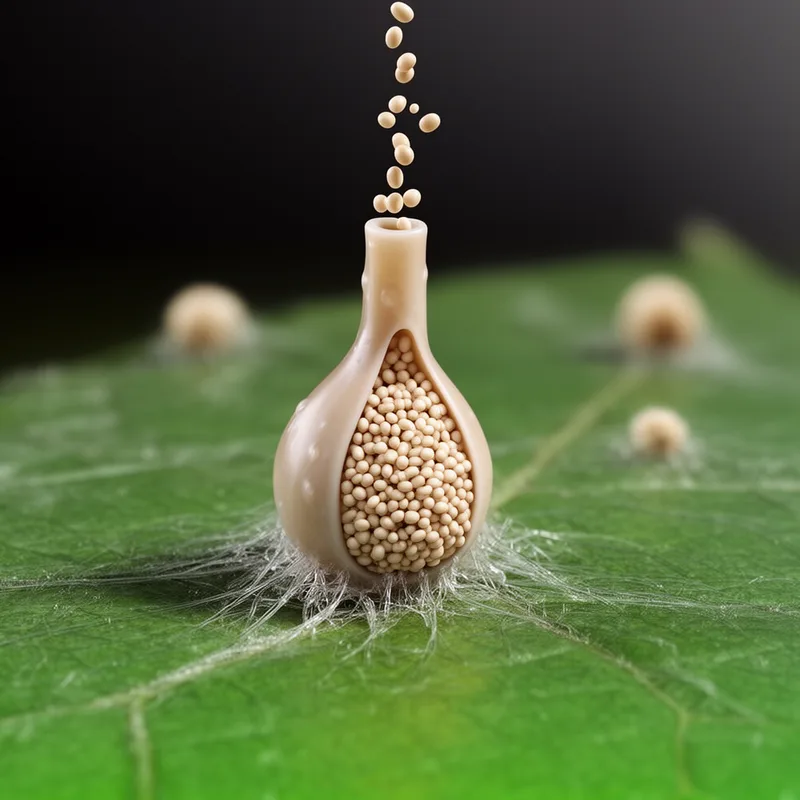
pycnidium
- noun
- /pɪkˈnɪdiəm/
- Specialized
- Many fungi produce conidia inside a pycnidium during their life cycles.
Examples
-
The botanist identified a pycnidium forming on the surface of the plant leaf.
-
A mature pycnidium may release spores involved in asexual reproduction.
-
The pycnidium is essential for the reproduction of certain fungi.
-
Researchers discovered a new type of pycnidium in the forest.
-
A mature pycnidium can produce numerous conidia for asexual reproduction.
-
Many fungi have a pycnidium that contains conidia for spreading spores.
-
The scientist examined a pycnidium to study its role in fungal reproduction.
Synonyms


 1
6.5
1
6.5
A part of some fungi and plants that makes and releases spores

A small bottle-shaped part of some fungi where they make cells for reproduction
Surface Forms
Morphology
pycnidium = pycn + idium
The word is built from specialized Greek combining forms (pycn- + -idium) that are not productive standalone English morphemes, so an average B1 learner cannot derive the meaning from the parts.
Etymology
The word pycnidium comes from the Greek root pykno- meaning 'dense' or 'thick' and the ending -idium meaning 'small'. Think of a small, dense flask that holds spores, so a pycnidium is the tiny, flask-shaped body where certain fungi store and release asexual spores.