
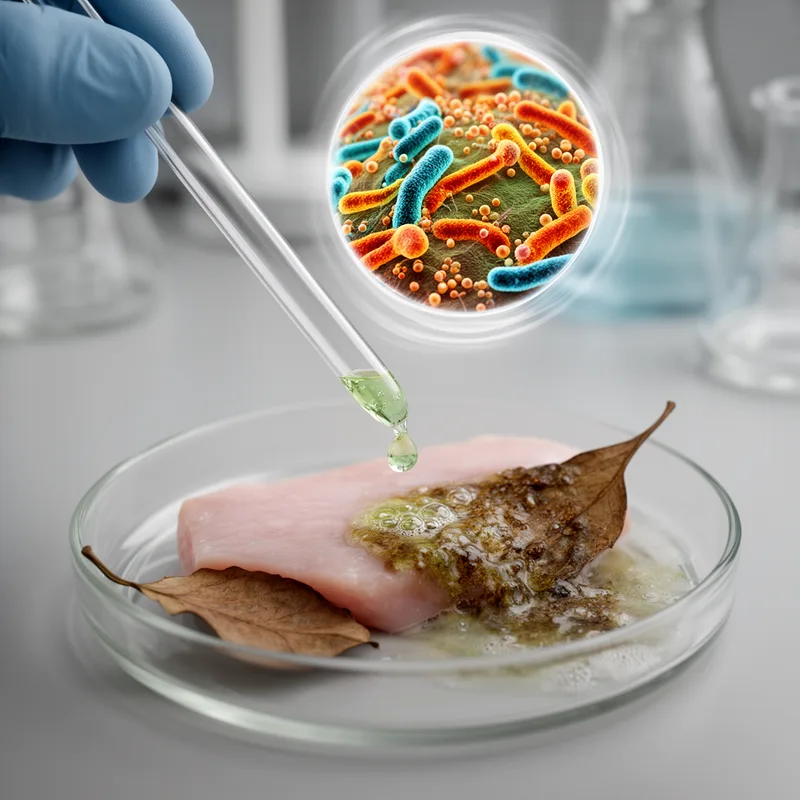
putrefacient
- adjective
- /ˌpjuːtrəˈfeɪʃənt/
- Specialized
- The putrefacient bacteria thrive in warm, moist environments.
Examples
-
Scientists study bacteria that release putrefacient enzymes during decomposition.
-
The stagnant water had a putrefacient effect on the nearby organic waste.
-
In medical history, certain wounds were treated with substances believed to be putrefacient.
-
Certain chemicals act as putrefacient agents in laboratory settings.
-
In biology, a putrefacient agent can accelerate the breakdown of dead plants and animals.
-
The presence of putrefacient microorganisms in the soil helps recycle nutrients by decomposing organic materials.
-
Rotting fruit emits gases from putrefacient reactions that can attract insects.
Synonyms


 1
9.9
To make dead plants or animals rot and smell bad
Antonyms

Surface Forms
Morphology
putrefacient = putrefaction (semi-transparent) = putrefac + ent
The adjective denotes 'causing putrefaction' and is directly related to the root meaning, but the Latinate combining form and the specialized scientific register make the relation only partly obvious to average learners.
Etymology
Putrefacient comes from Latin parts putre- meaning 'rotten' and facere meaning 'to make'. Like the words putrid and putrefy, a putrefacient is something that 'makes' things rot or break down.