

purple trillium
- noun
- /ˈpɜrpl ˈtrɪliəm/
- US
- Native Americans traditionally used the root of purple trillium in folk medicine to ease childbirth.
Examples
-
The forest floor was covered with blooming purple trillium in early spring.
-
The purple trillium blooms in the spring.
-
Native Americans used the root of purple trillium for medicinal purposes.
-
We spotted a rare purple trillium along the hiking trail.
-
Many people admire the beauty of the purple trillium.
-
In early spring, vibrant patches of blooming purple trillium can be seen adorning the forest floor.
-
While hiking, we came across a unique purple trillium with striking flowers.
Synonyms
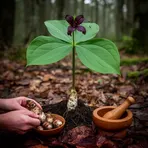
A woodland plant with three broad leaves, dark smelly flowers, and a bitter root used in folk medicine
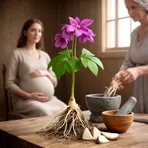
A North American plant with pink or purple flowers whose root people use to help women during childbirth
Surface Forms
Morphology
The phrase 'purple trillium' is fully compositional: 'purple' denotes the color and 'trillium' names a specific plant, so a learner who knows both words will infer it is a trillium that is purple. The extended botanical details in the definition are factual attributes but do not affect the straightforward adjective+noun meaning, a pattern that is cross-linguistically common.
Etymology
Purple trillium gets its name from how it looks: a purple flower with three large petals, because the word trillium points to 'three', so you can easily picture the shape. People long ago used its bitter root to help with childbirth, so the name also reminds us of its old 'folk medicine' use.

